
For most basement walls that will stay exposed, finished, or painted, a water-based liquid membrane is the better fit. A rubber-based coating is built for a different job: buried, below-grade exterior surfaces that get backfilled with soil shortly after application, not a wall you plan to live with or look at. Both are legitimate waterproofing chemistries. The difference comes down to what each one is actually engineered to handle once it cures.
Our basement membrane buyer's guide covers this at a high level, and our water-based vs silicone-based comparison handles the other common basement product question. This is the rubber-based half of that picture: what the chemistry is built for, a full comparison table, and which one actually belongs on your basement walls.
In This Comparison
- What rubber-based coatings are actually built for
- What a water-based liquid membrane is built for
- The full comparison table
- Which one fits your basement, by scenario
- Can you use both, or switch between them?
- FAQ
What Rubber-Based Coatings Are Actually Built For
Rubber-based waterproofing products in this category are rubberized asphalt or polymer-rubber emulsion coatings, formulated for below-grade, buried applications: footings, foundation walls, and retaining walls that get backfilled with soil or covered with a protection board shortly after application. They typically cure to a firm, dent-resistant film in about 24 hours, which is the window installers wait for before backfilling or covering with drainage board.
That fast below-grade cure comes with real trade-offs indoors. Rubberized asphalt coatings carry a noticeable tar or asphalt odor during application and cure, strong enough that most manufacturer guidance calls for ventilation, and it's not a smell you want to spend a weekend finishing a basement around. The coating also generally cannot be left exposed to direct sunlight for more than about 30 days before it needs to be buried or covered, since UV exposure degrades the film over time. In other words, the category is engineered around being buried fast, not around being seen, painted, or lived with.

What a Water-Based Liquid Membrane Is Built For
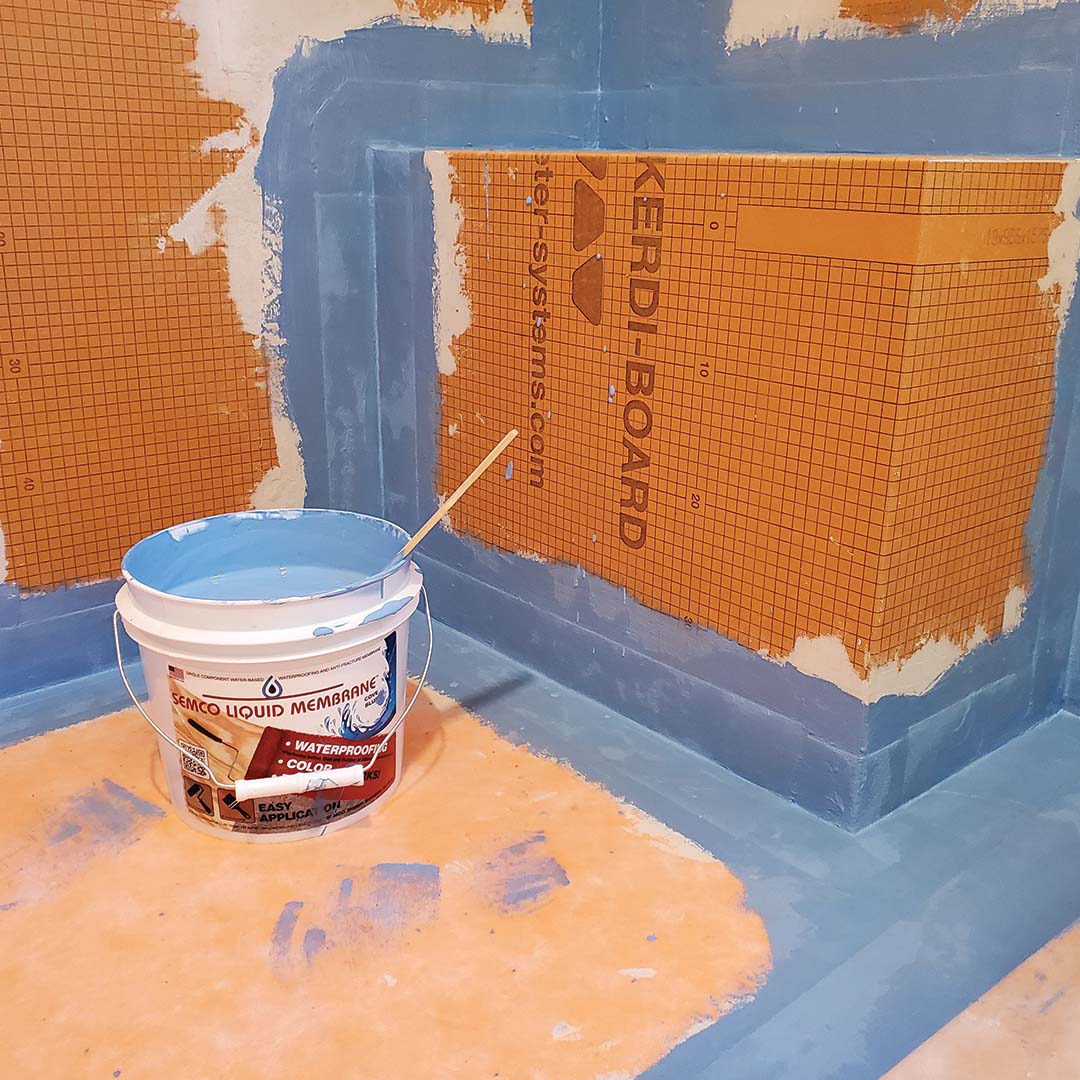
SEMCO Liquid Membrane is a single-component, water-based waterproofing membrane rated at 1,300% elongation and 234 PSI adhesion strength, sold by the pail (pint through 5-gallon) for coverage across full walls, floors, and joints, whether that surface ends up buried, exposed, or painted. It's rated to handle up to 10 PSI of vapor transmission and can reduce relative humidity in a treated space by up to 75%, which matters when the issue is moisture vapor pushing up through the slab, not just a visible crack.
Because it's water-based, cleanup is soap and water while it's wet, there's no solvent or asphalt smell to ventilate, and it doesn't require a respirator to apply in an enclosed, unfinished basement over a weekend. There's no 30-day burial clock working against you either: it cures over a longer window than a fast-set rubber-based coating (days rather than hours), which is the trade-off for a formulation built to be left exposed, painted over, or lived with rather than rushed under a backfill deadline.
The Full Comparison Table
| Factor | Water-based membrane (SEMCO Liquid Membrane) | Rubber-based coating (rubberized asphalt / polymer emulsion) |
|---|---|---|
| Built for | Full wall, floor, and joint coverage, buried or exposed | Below-grade, buried foundation and retaining walls |
| Elongation | Up to 1,300% | Roughly 900 to 1,200%, varies by formulation |
| Cure / cover time | Longer window, days to full cure, no backfill deadline | Fast, dent-resistant in about 24 hours, then backfill or cover |
| Odor / ventilation | Low odor, no respirator typically needed | Noticeable tar/asphalt odor, ventilation recommended |
| Sunlight / UV exposure | No burial deadline; suited to interior, exposed walls | Generally must be buried or covered within about 30 days |
| Typical container size | Pint to 5-gallon pail | Pint to 5-gallon pail, similar range |
| Can it be the finished, exposed surface? | Yes, paintable or color-matched, no burial required | No, engineered to be buried or covered, not left exposed |

1,300% elongation, 234 PSI adhesion, low odor, no burial deadline. About 200 sq ft per gallon.
Which One Fits Your Basement, by Scenario
You're coating the outside of a foundation wall before backfilling
This is the rubber-based coating's home turf. It cures fast enough to backfill within about a day, and since the wall is going straight into the ground, the odor and the 30-day UV clock never become a problem.
You're finishing the basement and the wall will stay exposed or painted
This is the water-based membrane's job. No burial deadline, no respirator, and a finish meant to be painted or color-matched rather than hidden under soil.
You have a floor-to-wall joint or a crack over a quarter inch
Either chemistry can bridge some movement, but a joint that keeps moving needs a compatible fabric reinforcement embedded wet between two coats, not just extra coats of either coating on its own.


Woven fabric embedded wet between two coats of membrane at floor-to-wall joints and cracks wider than 1/4 inch.
You're doing the work yourself, indoors, over a weekend
Odor and ventilation needs make rubber-based coatings a harder sell inside an occupied, enclosed space. A low-odor, no-respirator product suits a DIY interior job a lot better.
You're dealing with rising humidity or vapor, not just visible leaks
If the issue is moisture vapor pushing up through the slab rather than a specific crack, look for a membrane specifically rated for vapor transmission resistance. Rubber-based below-grade coatings are typically tested for exterior water resistance, not slab-level vapor drive.
Can You Use Both, or Switch Between Them?
On a full foundation job, it's common to see both: a rubber-based coating on the buried, exterior side of the wall, and a water-based membrane on the interior, finished side, since they're solving different problems. One is keeping bulk groundwater out from the buried exterior. The other is giving you a finished, paintable surface you can actually live with on the inside. Check any product's data sheet before assuming the two will bond to each other, and confirm full cure before coating over either one with a different chemistry.
Whichever chemistry goes where, timing the exterior work matters as much as the product. Our basement waterproofing checklist to run before fall rains walks through exactly when to start and what to check first, so a rubber-based exterior coat has time to cure and get backfilled before the wet season arrives.
Frequently Asked Questions
Is rubber-based or water-based better for basement waterproofing?
It depends on the surface. Rubber-based coatings are built for a buried, below-grade exterior wall that gets backfilled quickly. A water-based membrane is built for coverage that can stay exposed, painted, or lived with, which is what most finished or DIY interior basement work actually needs.
Can I leave a rubber-based coating exposed on a finished basement wall?
Not for long. Most rubber-based products in this category need to be buried or covered within about 30 days of application, since extended sunlight exposure degrades the film. Check the manufacturer's data sheet before planning to leave one exposed.
Why does a rubber-based coating need to be covered so quickly?
The fast cure is built around getting the wall backfilled or covered with a protection board within a day or so of application. That speed is an advantage on an exterior foundation job and a limitation anywhere the coating needs to stay visible.
Do I need a respirator for either product?
Water-based membranes are generally low-odor and don't require one. Rubber-based coatings carry a more noticeable tar or asphalt smell during application and cure, so ventilate the space and check the product's safety data sheet, especially for any indoor use.
Which one handles a floor-to-wall joint better?
Neither chemistry alone is enough at a joint that keeps moving. Either one needs a compatible fabric reinforcement embedded wet between two coats at that specific spot.
How much does each one cost for a basement-sized job?
Rubber-based coatings are typically priced per gallon in a similar range to a water-based membrane, but since they're usually limited to the buried, exterior side of the wall, most finished basements still need a separate interior product too. SEMCO Liquid Membrane runs about $0.43 per square foot on a 5-gallon pail and can cover the full interior job on its own.
Waterproofing basement walls you plan to see and live with?
SEMCO Liquid Membrane is built for exactly that: full coverage, low odor, no burial required.
Shop Liquid Membrane →Free shipping on orders over $99. 5-year standard limited warranty.
Further Reading
- Basement Waterproofing Membrane: How to Choose One That Won't Fail
- Water-Based vs Silicone-Based Basement Waterproofing: The Full Comparison
- Basement Waterproofing Checklist: 7 Steps Before Fall Rains Hit
Related reading:
- Liquid Rubber Alternatives: A Longer-Lasting Way to Waterproof
- Basement Waterproofing Membrane: Water-Based vs Silicone-Based vs Rubber-Based (Complete Comparison)
- Silicone-Based Waterproofing Coatings vs Water-Based Membranes: A DIYer's Guide
- Water-Based Membrane or Silicone-Based Coating: Which Belongs on a Metal Roof