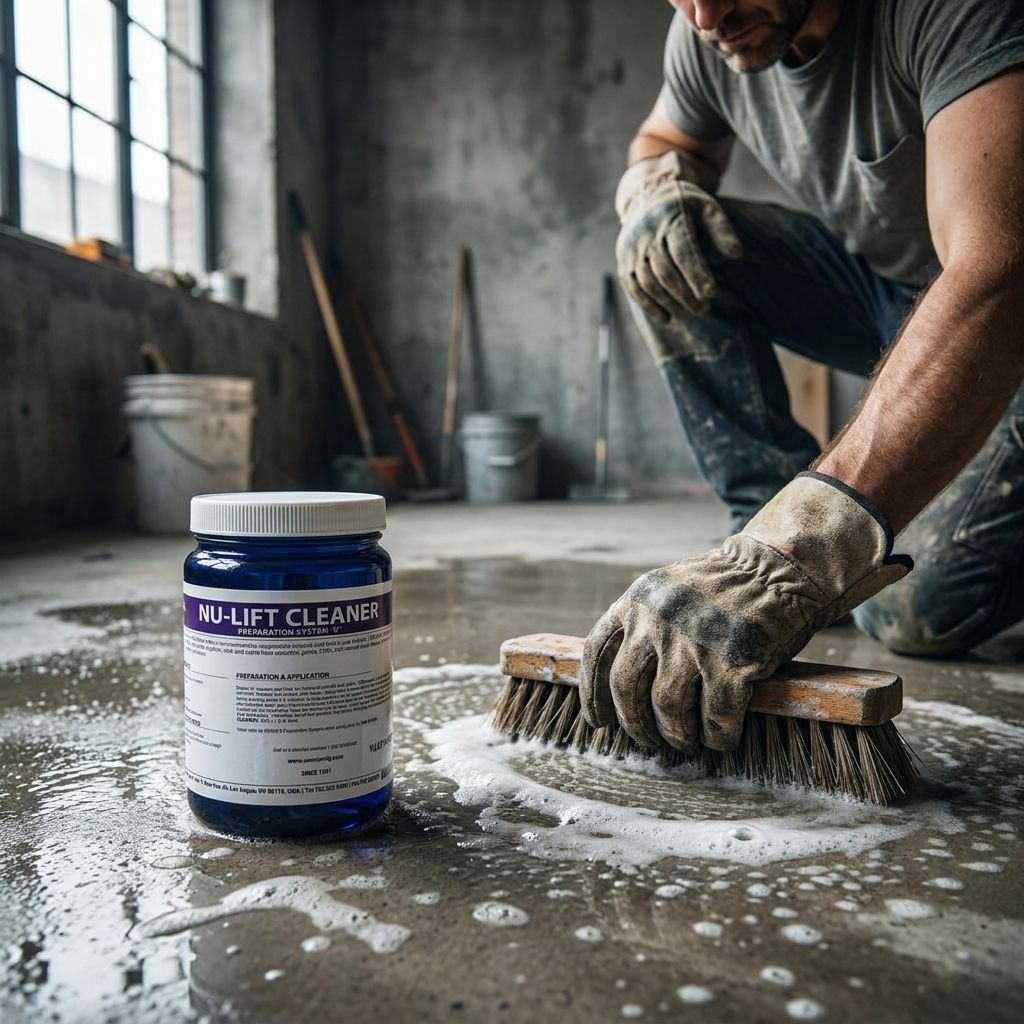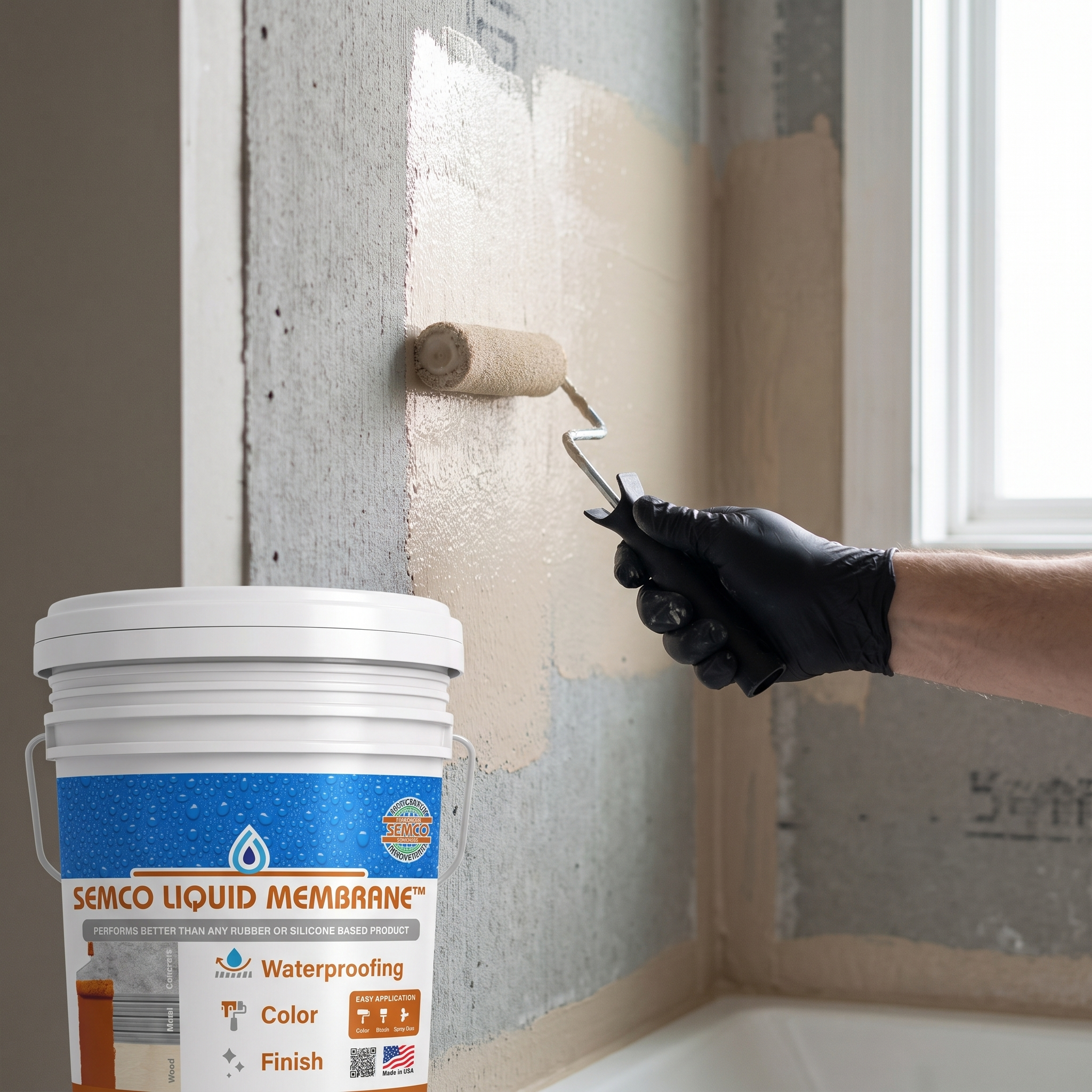

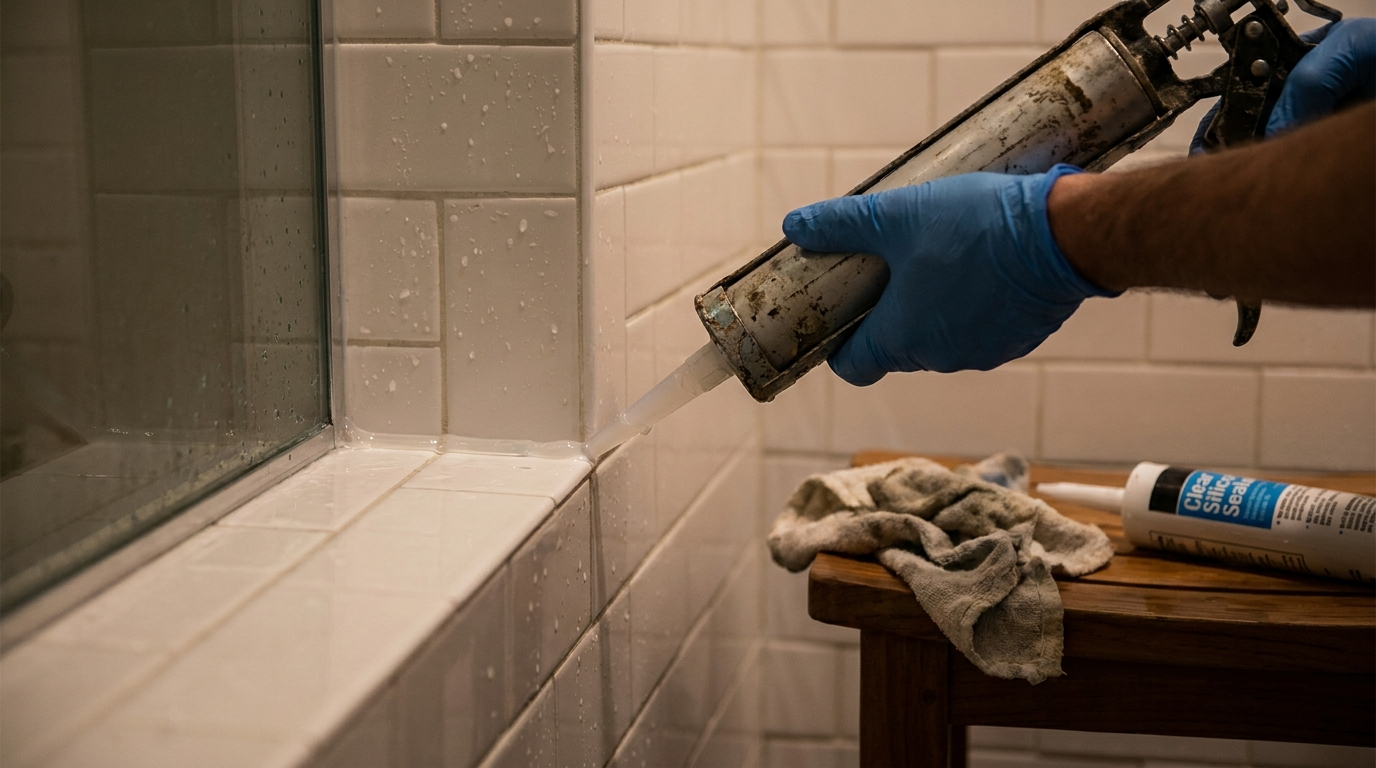
Silicone-based waterproofing coatings and water-based membranes solve different problems. Silicone is built for sealing joints and seams: the gap between a tub and tile, a window frame, a pipe penetration, where a small, flexible bead needs to stay put. Water-based membranes, like SEMCO Liquid Membrane, are built to cover large continuous surfaces: basement walls, shower pans, roof decks, and pool shells, in one DIY-applied coat. If you're patching a seam, reach for silicone. If you're waterproofing an entire surface, a water-based membrane will out-stretch, out-adhere, and out-dry a silicone-based product, and it goes on with a roller instead of a caulking gun. Here's the full breakdown, including a side-by-side spec comparison, so you match the right product to the job instead of guessing.
In this article
- What is silicone-based waterproofing?
- What is a water-based waterproofing membrane?
- Silicone-based vs water-based waterproofing: full comparison
- Which one should you use for your project?
- What about cracks and joints in a water-based system?
- Frequently asked questions
What Is Silicone-Based Waterproofing?
Silicone-based waterproofing is a caulk or coating built around a silicone polymer backbone. Because that backbone is inorganic, it resists UV breakdown well and stays flexible for years without cracking or drying out. Silicone skins over in about 30 minutes and fully cures within 24 to 48 hours, and standard acetic-cure formulas give off a vinegar-like odor while curing that dissipates within a few hours (neutral-cure versions run lower odor from the start).
Where silicone struggles is scale. It's designed to seal a joint or gap, not to waterproof a large flat or vertical surface, and it isn't rated for the kind of surface adhesion or shear strength a coating needs to hold up under hydrostatic pressure. It's also notoriously hard to recoat: most paints and coatings, including more silicone, won't bond well to a fully cured silicone surface, so a mistake here is hard to fix without cutting it out.
What Is a Water-Based Waterproofing Membrane?
A water-based waterproofing membrane is a single-component, ready-to-use coating applied by roller, brush, or sprayer that forms one continuous, seamless barrier over the whole surface. SEMCO Liquid Membrane, for example, is a hybrid elastomer blend that coats, colors, and seals in one product, dries to the touch in under 45 minutes, and can be applied on the negative side (the dry side of a wall, opposite the water source), which most coatings can't do.
Because it's water-based, it carries low odor and no harsh solvent smell, which matters if you're working in an occupied basement or an enclosed shower stall. It's rated for interior and exterior use on concrete, wood, masonry, and even submerged applications like pools and fountains.
Silicone-Based vs Water-Based Waterproofing: Full Comparison
Here's how the two compound types stack up on the specs that actually matter for a DIY project.
| Feature | Water-Based Membrane | Silicone-Based Coating |
|---|---|---|
| Dry / cure time | Dry to the touch in under 45 minutes | Skins in about 30 minutes, fully cures in 24 to 48 hours |
| Adhesion strength | 234 PSI (ANSI A118.10, 4-wk) | Not rated for structural surface adhesion, built for joint bonding instead |
| Shear resistance | Over 200 PSI | Not applicable, it isn't used as a surface coating |
| Maximum elongation | Up to 1300% | Around 562% |
| Negative-side waterproofing | Yes | No |
| Best surface type | Continuous flat and vertical surfaces: walls, floors, roofs, pool shells | Joints, seams, and gaps between two materials |
| UV stability outdoors | Yes, suitable for outdoor use | Yes, the silicone backbone resists UV degradation well |
| Application tool | Roller, brush, or sprayer | Caulking gun |
| Odor | Water-based, low odor | Vinegar-like odor during cure with standard formulas, dissipates within hours |
| Can you recoat it later | Yes, additional coats bond to the existing membrane | Difficult, most coatings and paints don't bond well to cured silicone |
Water-based membrane figures reflect SEMCO Liquid Membrane's published specifications. Silicone-based figures reflect general, publicly documented behavior of acetic and neutral-cure silicone sealants and coatings, actual performance varies by manufacturer and formula.

Single-component, roller-applied membrane with 234 PSI adhesion and 1300% elongation. Dries to the touch in under 45 minutes.
Which One Should You Use for Your Project?
Match the product to the surface, not the other way around.
- Use silicone-based sealant for: the joint between a tub and tile wall, a sink backsplash seam, around a window frame, or any narrow gap between two different materials that needs to flex without pulling apart.
- Use a water-based membrane for: basement walls and floors, shower pans and curbs before tiling, roof decks and balconies, pool shells and fountains, retaining walls, and any large continuous surface where you need one unbroken waterproof layer.
Most real DIY projects actually use both: a water-based membrane across the field of the surface, and a bead of compatible sealant at transitions, penetrations, or dissimilar-material joints where the membrane and fabric reinforcement don't already handle it. For a full walkthrough of a whole-surface project, see our step-by-step guide to waterproofing a basement from the inside.
What About Cracks and Joints in a Water-Based System?
A water-based membrane handles hairline movement on its own, but wider cracks and joints need reinforcement. Any crack narrower than 1/4 inch, SEMCO Liquid Membrane can be applied directly over it. Anything 1/4 inch or wider, coves, corners, and changes of plane need Fabric Reinforcement embedded in the wet membrane to bridge the gap and stop the crack from telegraphing back through the coating.
The process: apply a generous coat of membrane over the crack or joint, press the fabric into it while still wet, let it set for 10 to 15 minutes, then apply a second coat of membrane over the top to fully encapsulate the fabric.
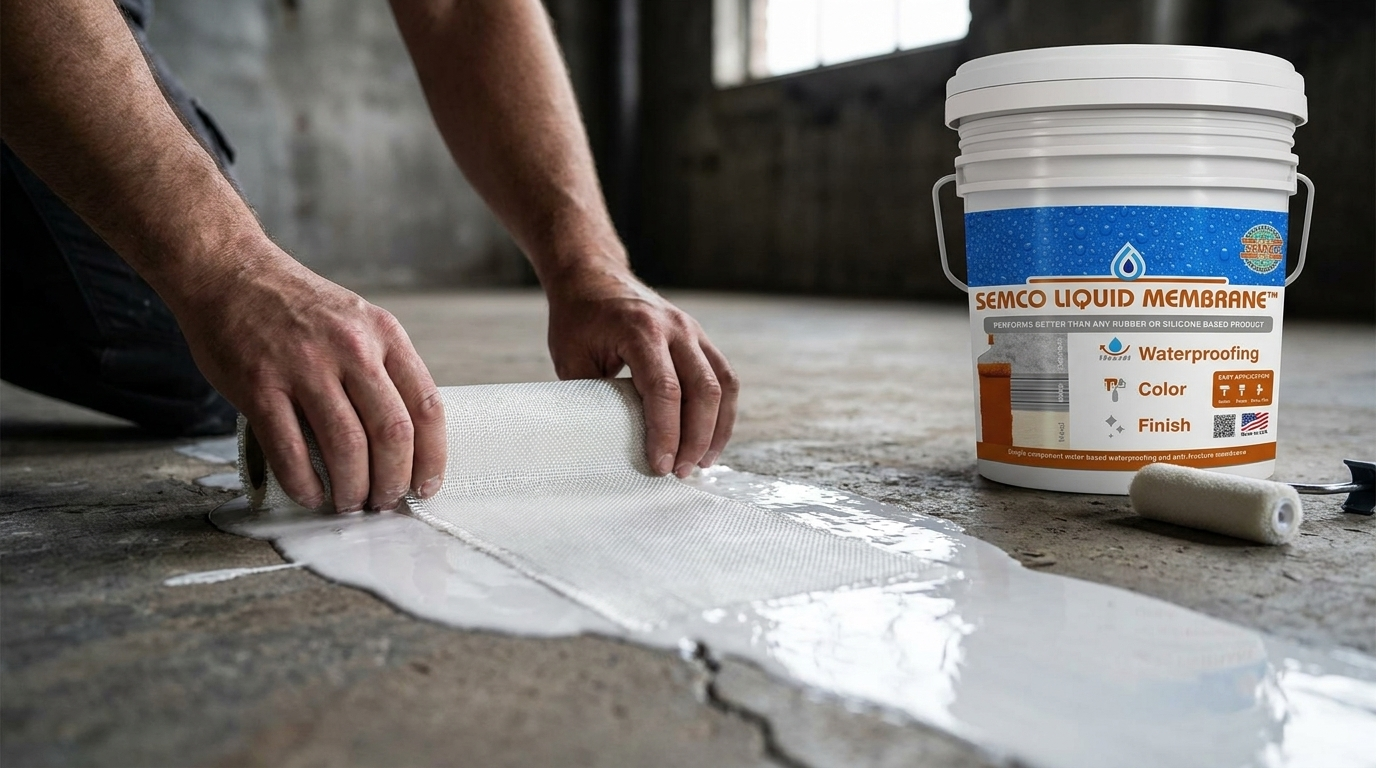

Embeds into wet Liquid Membrane to bridge cracks, joints, coves, and corners 1/4 inch or wider on interior and exterior surfaces.
Frequently Asked Questions
Is silicone waterproofing enough for a basement wall?
No. Silicone is built to seal a joint, not to waterproof a large surface. It isn't rated for the surface adhesion or coverage a basement wall needs, and it won't stop water intrusion across an entire wall the way a continuous membrane coat does. Use silicone only for small gaps and penetrations within a larger waterproofed surface.
How long does silicone-based waterproofing last?
A quality silicone sealant can hold up for years once cured, since its inorganic backbone resists UV breakdown well. How long it lasts in practice depends on the joint's exposure to movement, standing water, and whether it was applied over a properly prepared surface.
Can I apply a water-based membrane over cured silicone?
Generally, no. Cured silicone is one of the hardest surfaces to get anything to bond to, including more silicone or a coating like a water-based membrane. If a joint was previously sealed with silicone, it typically needs to be cut out and removed before a membrane is applied over that area.
Is water-based waterproofing safe to use indoors?
Yes. A water-based membrane like SEMCO Liquid Membrane carries low odor with no harsh solvent smell, which makes it workable in an occupied basement or an enclosed shower stall without heavy ventilation. Always check the specific product label for application temperature and ventilation guidance.
Which costs less, silicone-based or water-based waterproofing?
It depends on the job. Silicone is sold and priced for sealing narrow joints, not covering square footage, so it isn't a fair per-square-foot comparison to a membrane. For large surfaces, a water-based membrane is the more economical choice per square foot simply because it's the product designed to cover that much area in one system.
Ready to Waterproof the Whole Surface, Not Just the Seams?
SEMCO Liquid Membrane goes on with a roller, dries in under 45 minutes, and is backed by a 4.8+ star rating from DIYers who've used it on basements, showers, roofs, and pools.
Shop SEMCO Liquid Membrane →Free shipping on orders over $99 to the contiguous US.
Related reading:
- Liquid Rubber Alternatives: A Longer-Lasting Way to Waterproof
- Water-Based Membrane or Silicone-Based Coating: Which Belongs on a Metal Roof
- Water-Based Membrane vs Rubber-Based Coating for Basement Walls: Which One Actually Stops Water
- Water-Based vs Silicone-Based Basement Waterproofing: The Full Comparison