
Metal roofs move. They expand in the afternoon sun, contract overnight, and flex under foot traffic and hail. Whatever you coat one with has to move along with it, seal around dozens of screws and seams, and hold up through freeze-thaw cycles without cracking, chalking, or peeling loose. That rules out a lot of products before you even open the can.
Two coating families dominate the metal roof coating aisle: silicone-based elastomeric coatings and rubber-based coatings (rubberized asphalt or polymer rubber). Both work. Neither is automatically the right choice. Here is how each one actually behaves on metal, and where a single-component, water-based liquid membrane fits into that comparison.
How silicone-based coatings perform on metal
Silicone-based coatings cure into a rubber-like membrane that is genuinely good at shedding standing water. Because silicone is moisture-cured, a fully cured film will not reabsorb water, which is why silicone shows up so often on low-slope roofs where puddling is a fact of life. On a sloped metal roof, that ponding resistance matters less, but the other traits carry over: strong UV reflectivity (silicone coatings typically bounce back 80 to 90 percent of solar UV), the ability to cure in cooler and even below-freezing conditions that would stall other chemistries, and elongation that commonly runs from roughly 200 to 800 percent depending on the specific formulation, giving the film room to move with the panel.
The trade-offs are just as real. Silicone has comparatively low tensile strength, so hail and foot traffic can nick or scuff the surface more easily than a tougher film would. It attracts dirt, and that dirt gradually cuts into the UV protection over time. It is also slippery when wet, which is worth knowing before anyone walks that roof again. And because a silicone-based product typically resists water so well once cured, it needs a genuinely dry substrate and enough working time before rain to set up properly.
How rubber-based coatings perform on metal
Rubber-based coatings (rubberized asphalt or polymer-modified rubber) lean on elastic polymers that stretch and recover as the roof moves through its daily temperature swing. That flexibility is the whole point: it is what lets the coating seal around vents, seams, and flashing without splitting at the first hard freeze. Higher-temperature rubber-based formulations are rated to handle sustained heat well above 200°F without the adhesive layer breaking down, which is one reason this family shows up so often on metal.
The catch is odor and cure conditions. Rubberized asphalt coatings are typically solvent-carried, and that means a noticeable smell during application and cure, which matters if the roof sits close to windows, a patio, or a neighbor's yard. Application windows also tend to be less forgiving around humidity and temperature than a water-based product, and full cure can take longer before the coating is ready to handle weather.
Where a water-based liquid membrane fits in
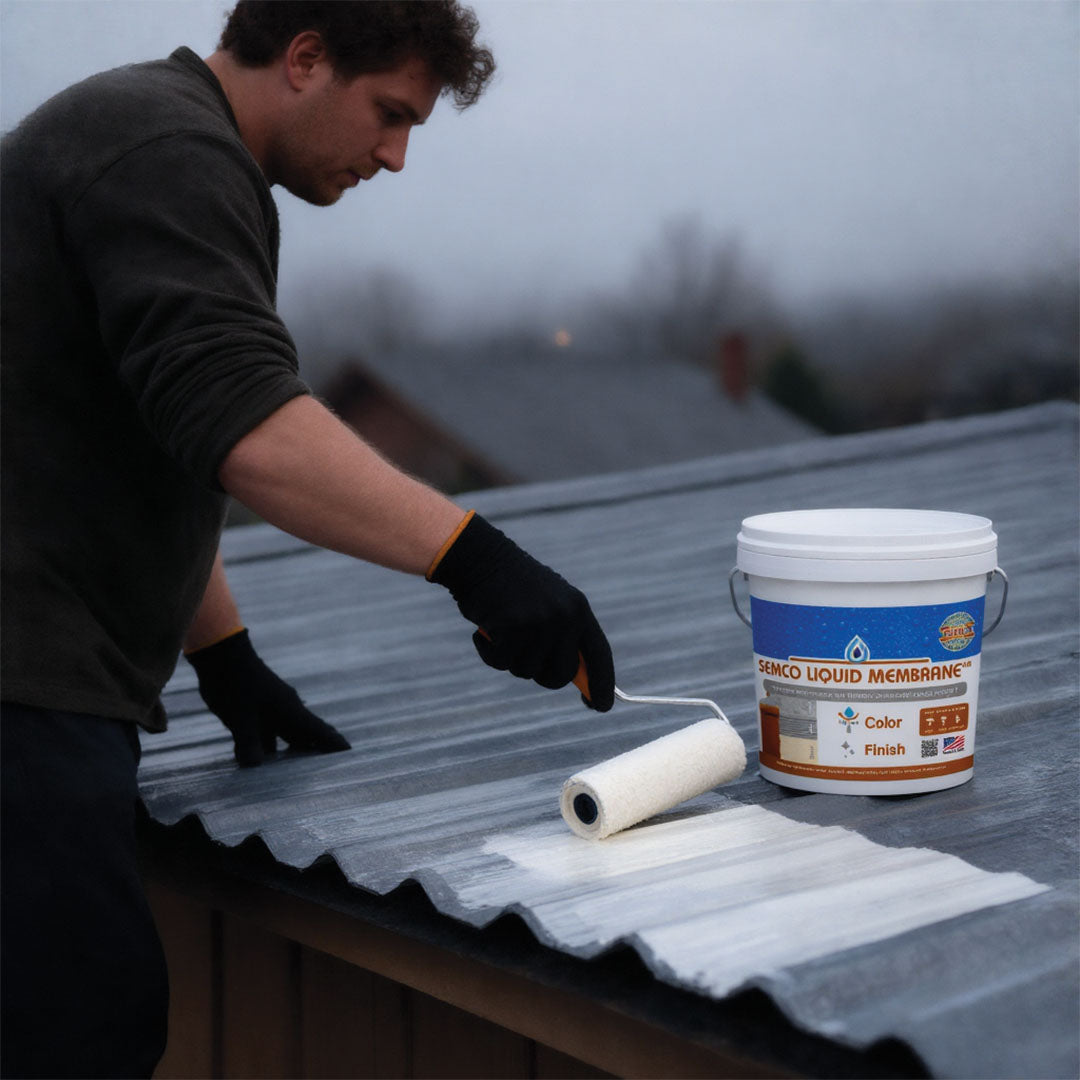
SEMCO Liquid Membrane sits in a third category: a single-component, water-based waterproofing membrane rather than a solvent-based rubber coating or a moisture-cured silicone. That formulation changes a few things that matter specifically on a metal roof.
Odor and application conditions
Because it is water-based, there is no solvent smell during application or cure, which matters on a roof that sits over a porch, an attic bedroom, or a tight suburban lot line. Cleanup is soap and water rather than mineral spirits.
Flexibility
SEMCO Liquid Membrane is rated at up to 1300 percent elongation with 234 PSI shear bond strength, which is a wider working range than the elongation figures typically cited for silicone-based coatings and gives it plenty of room to move with a metal panel through seasonal expansion and contraction without cracking at seams or fastener heads.
DIY application
It is a single-component product straight from the pail, no mixing, no catalyst, no solvent-rated respirator required, which is why it shows up as often on DIY roof, deck, and basement projects as it does on professional jobs.

SEMCO Liquid Membrane™
Single-component, water-based waterproofing membrane. 234 PSI shear bond strength, up to 1300% elongation, no solvent odor, made in the USA.
See SEMCO Liquid Membrane →Which one actually belongs on your roof
If your metal roof has any low-slope sections where water can pond, a silicone-based coating's resistance to standing water is a genuine advantage worth weighing. If the roof runs hot for long stretches and you need a coating proven at sustained high temperatures, a rubber-based coating's heat tolerance is the reason it is specified so often on metal and asphalt alike.
For most sloped residential metal roofs, where the real risks are seam movement, fastener backout, and small leaks that started as a pinhole or rusted screw you can trace and fix yourself, the deciding factors tend to be odor, cure conditions, and how much the coating can flex without cracking. That is where a water-based membrane earns its place in the conversation alongside silicone- and rubber-based options, not as a replacement for either in every situation, but as the option that skips the solvent smell and gives you a wide working window to get a coat down before weather moves in.
Whichever family you choose, the fundamentals stay the same: a metal roof left uncoated and unmaintained will eventually fail at its weakest seam. The coating chemistry decides how it fails and how easy the fix is, not whether it needs attention at all.
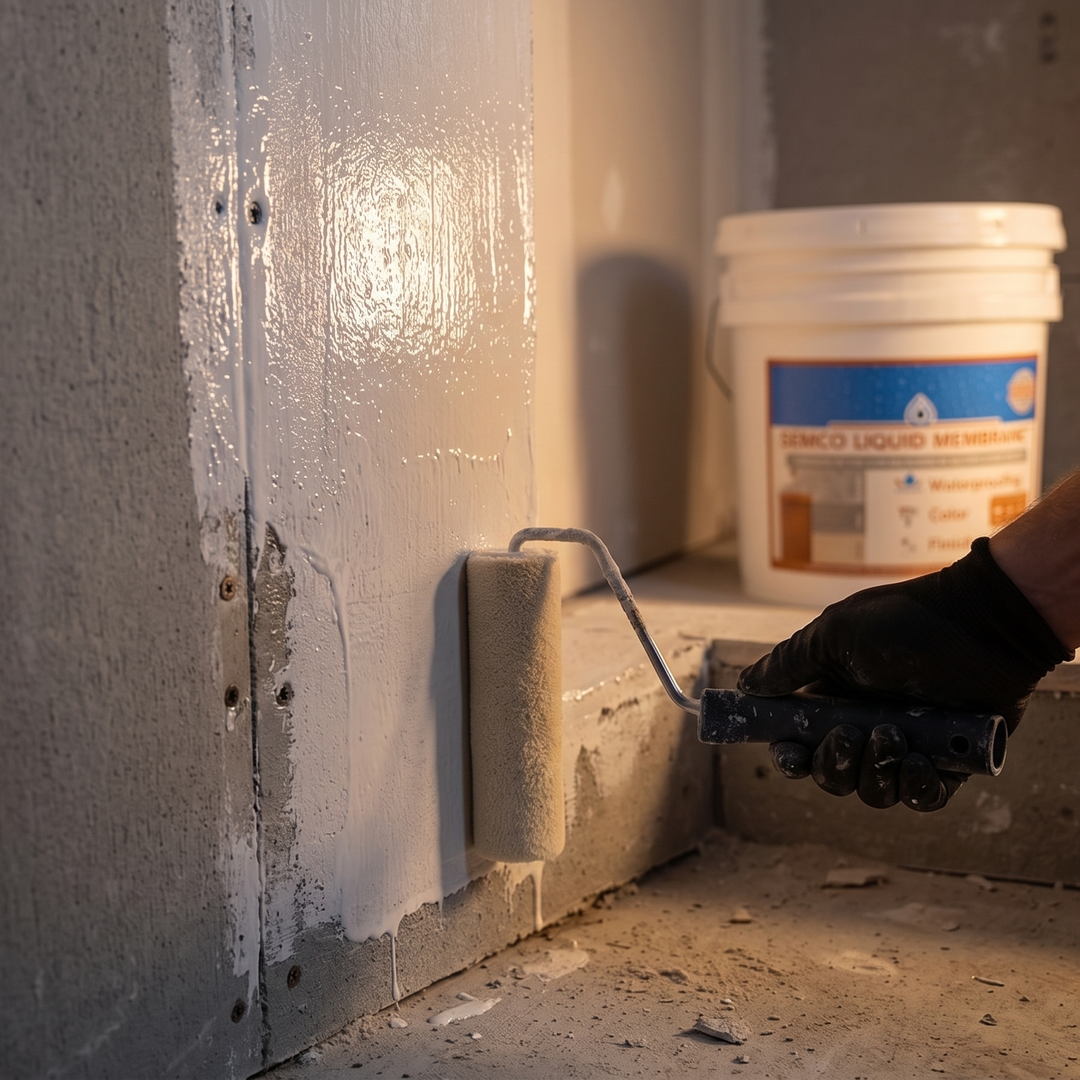
Waterproofing a basement instead?
The same three coating families show up below grade too, with different trade-offs at play. See our water-based vs silicone-based basement waterproofing comparison for the full breakdown by scenario.
Related reading:
- Liquid Rubber Alternatives: A Longer-Lasting Way to Waterproof
- Basement Waterproofing Membrane: Water-Based vs Silicone-Based vs Rubber-Based (Complete Comparison)
- Silicone-Based Waterproofing Coatings vs Water-Based Membranes: A DIYer's Guide
- Water-Based vs Silicone-Based Basement Waterproofing: The Full Comparison