
Standard drywall is not waterproof, and neither is most of what gets sold as "waterproofing drywall" at the hardware store. Green board and purple board are moisture resistant, which means they can handle humidity and the occasional splash, but they still absorb standing water and will fail against a bathroom flood, a leaking pipe, or a below-grade basement wall. The only drywall panel that is genuinely waterproof is cement board, and it is built for direct water contact like a shower wall or tub surround. For everything in between, the fix is not a different sheet of drywall. It is sealing the drywall you already have with a flexible, water-based liquid membrane at the seams, joints, and lower section of wall where moisture actually gets in.
Is Drywall Waterproof?
No, not on its own. Standard drywall has a paper facing over a gypsum core, and both absorb water fast. Once it is wet, drywall softens, sags, and becomes a food source for mold within 24 to 48 hours. "Waterproof drywall" is a phrase people use loosely to mean three very different products, and mixing them up is how DIY bathrooms and basements end up needing to be redone:
- Green board / purple board: moisture resistant only. Fine for humidity, not for direct water.
- Cement board (backer board): the only panel that is actually waterproof and rated for direct water contact.
- Any drywall sealed with a liquid membrane: turns the surface you already have into a waterproof one at the seams and joints, without tearing out and replacing panels.
What Is the Difference Between Green Board, Purple Board, and Cement Board?
This is the single most common point of confusion, and it is worth getting right before you buy anything.
| Material | Moisture resistance | Handles direct water? | Best for |
|---|---|---|---|
| Standard drywall | None | No | Dry interior rooms |
| Green / purple board | Moderate (humidity only) | No | Bathroom walls away from the tub, laundry rooms |
| Cement board | Full | Yes | Shower walls, tub surrounds, steam rooms |
| Any drywall + liquid membrane | Full at coated areas | Yes, at seams, joints, and coated sections | Basements, existing walls, seams and penetrations on any board type |
General moisture-resistance grading per building material guidance on greenboard vs. standard drywall.
Do You Need Waterproof Drywall in a Basement?
Basement walls that sit at or below grade face hydrostatic pressure, meaning groundwater is being pushed through the foundation from the outside in, not just sitting in the air as humidity. Green board has no defense against that. Even a small amount of groundwater infiltration will saturate a panel installed on a below-grade wall over time.
The more reliable approach for a basement is to waterproof the wall assembly itself, sealing the drywall-to-floor joint, seams, and any penetrations with a flexible membrane before the space is finished. Our guide on waterproofing a basement from the inside walks through the full wall prep if you are starting from bare block or concrete rather than existing drywall.

Can You Waterproof Regular Drywall Yourself?
Yes, for the parts of a wall that actually take on moisture, which is almost always the seams, taped joints, corners, and the bottom few feet near a tub, shower curb, or slab. You do not need to strip the wall down to cement board to get real protection there. A single-component, water-based liquid membrane rolls on directly over prepped, taped, and sanded drywall and cures into a flexible, seamless barrier.
SEMCO Liquid Membrane is built for exactly this kind of job: it carries 234 PSI shear bond strength and 1,300% elongation, so it moves with the wall instead of cracking at the seam the way a rigid coating can, and it is low-odor since it is water-based rather than solvent-based.
The same seam-and-joint approach applies behind shower tile, where the floor-to-wall joint, the curb, and niche corners are the spots that actually leak. See our shower waterproofing membrane guide for how to reinforce those three areas before tiling.
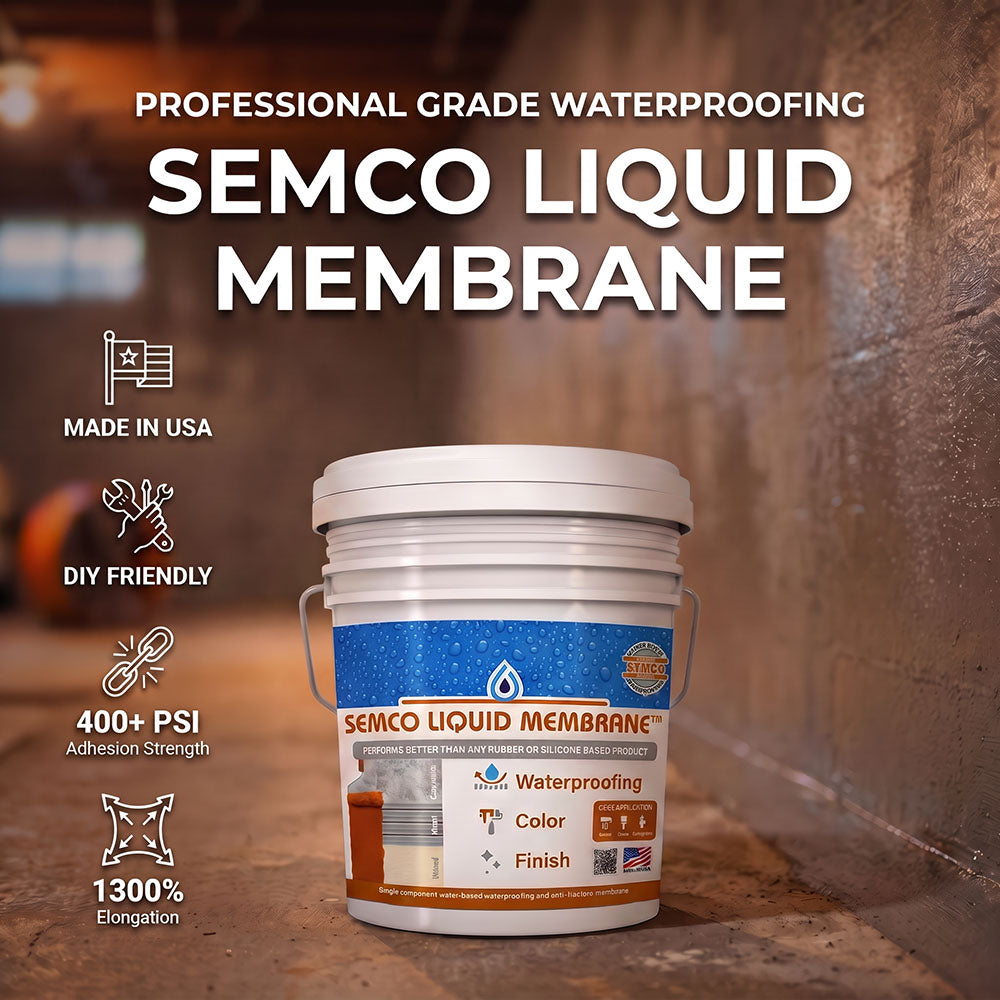
Single-component, water-based membrane for seams, joints, and drywall. 234 PSI shear bond strength, 1,300% elongation, 15 colors.
Frequently Asked Questions
Does waterproofing drywall replace green board?
No. Green board is still a reasonable base panel for humid rooms. Coating the seams and lower wall with a liquid membrane adds the direct-water protection green board does not have, on top of whatever panel you started with.
Will sealing drywall seams stop mold for good?
It removes the moisture source that mold needs at the coated joints and seams, which is the most common failure point. It will not fix an active leak or a ventilation problem elsewhere in the room, so pair it with fixing the actual water source. Our piece on black mold in unfinished basements covers what to check beyond the wall itself.
Is a water-based membrane safe to use indoors?
SEMCO Liquid Membrane is single-component and water-based, so it carries a much lighter odor than solvent-based or bitumen coatings, which makes it more practical for an occupied home. Ventilate the room while it cures regardless of which product you use.
Can I paint or tile over a waterproofed seam?
Yes, once the membrane has fully cured. Check the label for exact cure time, since it varies by humidity and temperature, then paint or tile as you normally would.
How is this different from the standard drywall waterproofing guide?
Our waterproofing drywall guide covers why it matters and where it is used. This page is the shorter, direct-answer version for the specific questions people search most: what counts as actually waterproof, and whether you need to replace your panels or just seal them.
Ready to Seal Your Seams?
SEMCO Liquid Membrane goes on with a roller, no solvents, no strong odor, and it moves with your wall instead of cracking at the joint.
Shop SEMCO Liquid Membrane →Free shipping on orders over $99 in the contiguous US.
Related reading: