
Pool decks crack every winter for one repeatable reason: water gets into the concrete's pores and hairline cracks, freezes, expands, and pushes the crack a little wider, then does it again the next cold snap. Repairing the cracks and sealing the deck properly breaks that cycle. This guide covers why it happens, how to repair existing cracks, and the two SEMCO systems for sealing a pool deck depending on whether you're waterproofing it or just coloring and protecting bare concrete.

In this guide
- What you'll need
- Why pool decks crack every winter
- Step 1: Clean and inspect the deck
- Step 2: Repair existing cracks
- Step 3: Pick the right sealing system
- Step 4: Keep the expansion joints clear
- Mistakes that make pool deck cracking worse
- FAQ
What you'll need
- SEMCO Liquid Membrane and Fabric Reinforcement (for cracks 1/4 inch or wider)
- Concrete crack filler (for hairline cracks)
- Titan Shield Gloss, with Titan Shield Non-Skid Additive, if topcoating a Liquid Membrane repair
- PreStain and Natural Shield, if coloring and sealing bare, uncracked concrete instead
- Wire brush and stiff broom
- 1/4" nap roller, HVLP sprayer, or airless sprayer with a size 17 tip
Why do pool decks crack every winter?
Concrete is porous, so it absorbs a small amount of water from splash-out, rain, and irrigation. In freezing climates, that absorbed water expands roughly 9% in volume as it turns to ice, and that expansion pushes outward against the surrounding concrete from the inside. A hairline crack gets slightly wider every time it freezes and thaws, which is why an untreated deck seems to develop a few more cracks each spring. Poorly maintained or missing expansion joints make it worse, since the joints are what let the slab expand and contract with temperature without cracking the field of the concrete itself. Soil movement and settlement under the slab contribute too, but the freeze-thaw cycle is what turns a small, stable crack into a growing one.
Step 1: Clean and inspect the deck
Sweep and pressure wash the deck to remove dirt, algae, and any old failing sealer or coating, then walk the entire deck and mark every crack, noting roughly how wide each one is. This matters because hairline cracks (under 1/4 inch) and structural cracks (1/4 inch or wider) get repaired differently, and it also determines which sealing system below makes sense: a deck with real structural cracking is a better fit for the full membrane system, while a deck that's just bare and worn is a better fit for stain and seal.
Step 2: Repair existing cracks
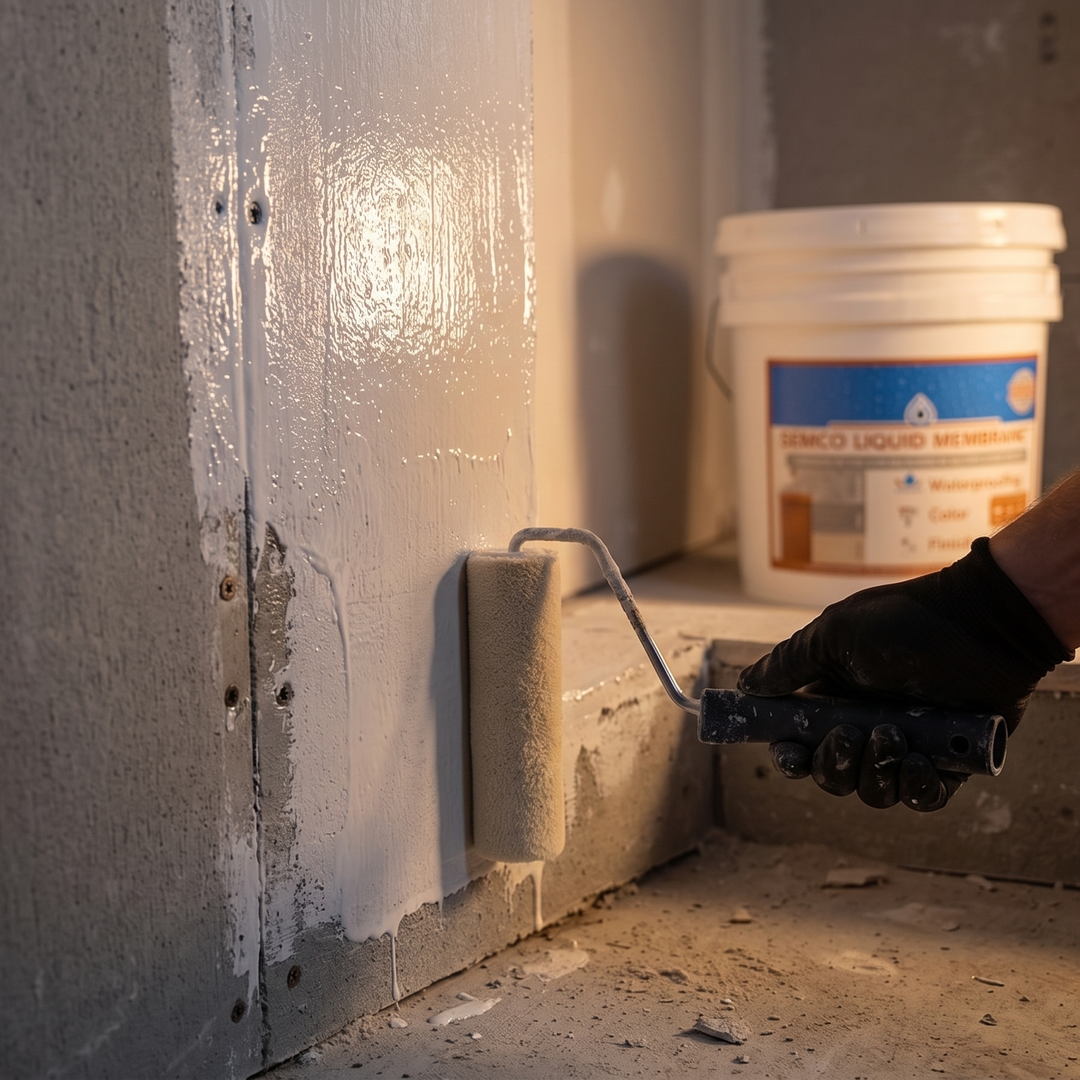
For hairline cracks under 1/4 inch, clean out any debris with a wire brush and fill with a concrete crack filler, slightly overfilling to account for shrinkage as it cures. For cracks 1/4 inch or wider, a filler alone won't move with the slab, you need Fabric Reinforcement embedded in a wet coat of SEMCO Liquid Membrane to actually bridge the gap and flex with it instead of cracking again in the same spot.
Step 3: Pick the right sealing system
These two systems aren't interchangeable, and they shouldn't be mixed. Pick one based on what your deck needs:
If you repaired cracks with Liquid Membrane: topcoat with Titan Shield Gloss
Once Liquid Membrane has cured over any repaired cracks or a full waterproofing coat, protect it with Titan Shield Gloss, a film-forming polyurethane hybrid sealer rated for foot, chemical, and vehicle traffic and specifically recommended for pool decks. It shields the membrane underneath from UV and wear rather than leaving it exposed. Because it's a glossy topcoat, mix in Titan Shield Non-Skid Additive for any area around the pool where bare, wet feet will be walking.
If the deck is bare, uncracked concrete: stain with PreStain, then seal with Natural Shield
Natural Shield is a penetrating sealer, it needs to soak into bare, porous concrete to work, so it isn't applied over a Liquid Membrane coating. If your deck doesn't need crack repair and you mainly want color and protection, apply PreStain first for color, then seal with Natural Shield, which reduces the water absorption that drives freeze-thaw cracking and leaves a natural, non-slip finish rather than a glossy film.

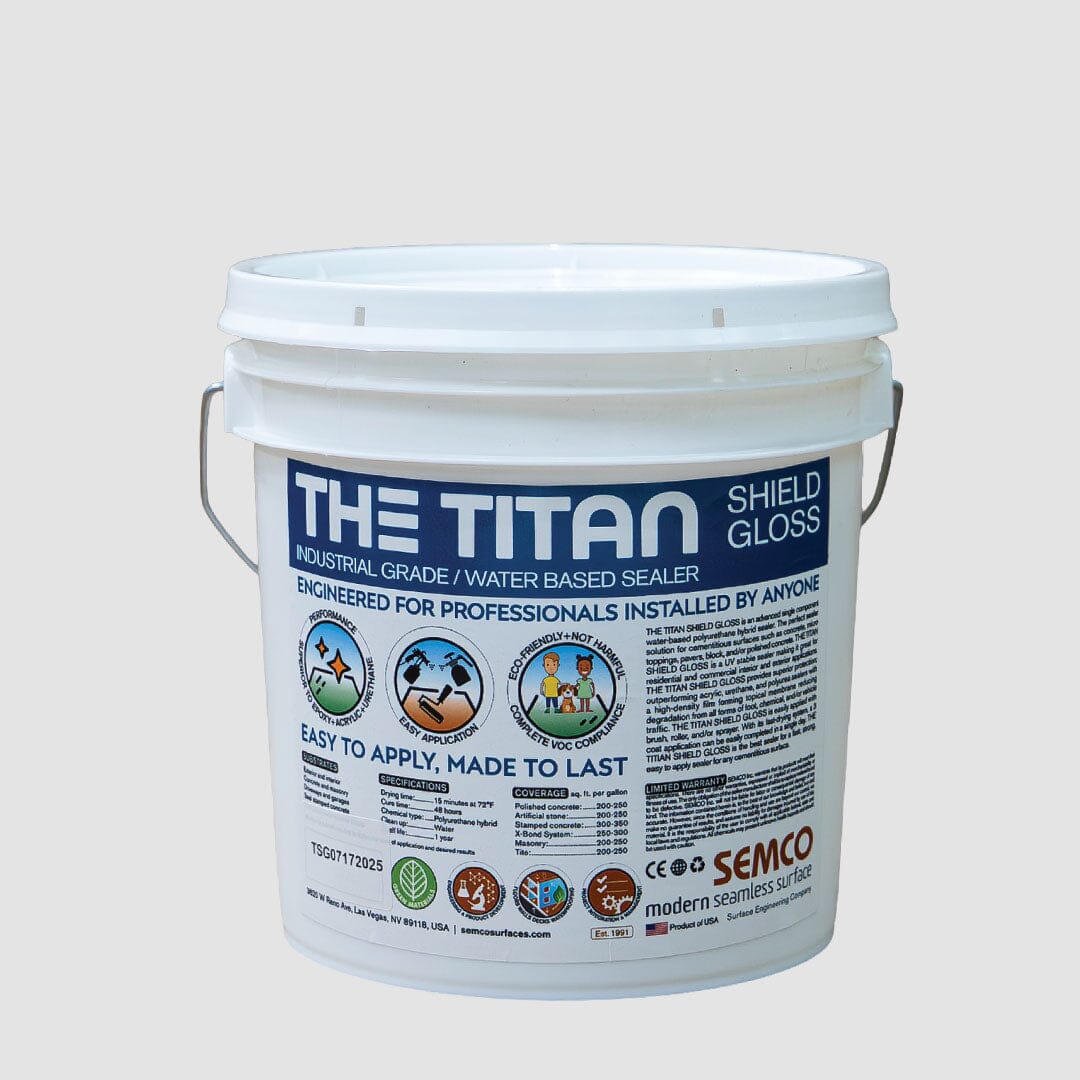
Film-forming polyurethane hybrid sealer, traffic-rated, recommended for pool decks.

Water-based penetrating sealer that reduces water absorption and prevents freeze-thaw cracking, pitting, and spalling.
Step 4: Keep the expansion joints clear
Expansion joints are the thin gaps between concrete sections that let the slab move with temperature instead of cracking. Keep them clear of debris and check that the joint filler or caulking is intact, since a blocked or failed joint forces the slab to crack somewhere else to relieve the same pressure the joint was supposed to handle.
Mistakes that make pool deck cracking worse
- Mixing the two sealing systems. Natural Shield needs bare, porous concrete to penetrate into, it isn't meant to go over a Liquid Membrane coating, and Titan Shield Gloss is the topcoat that pairs with Liquid Membrane instead.
- Sealing over unrepaired cracks. A sealer isn't a crack repair, water will still get into an open crack and freeze underneath the sealed surface.
- Skipping the non-skid additive on a gloss topcoat. A glossy film sealer around a pool deck, where feet are wet, needs the non-skid additive mixed in.
- Ignoring hairline cracks. A hairline crack left alone this year is a wider crack next year, once the freeze-thaw cycle starts on it.
- Skipping the expansion joints. Cracked or missing joint filler transfers all the movement stress onto the field of the concrete instead.
Frequently asked questions
Can I use Liquid Membrane and Natural Shield together?
No. Natural Shield is a penetrating sealer that needs to soak into bare, porous concrete to work. Liquid Membrane cures into a surface film, so there's nothing left for Natural Shield to penetrate. If you've repaired or waterproofed a deck with Liquid Membrane, seal it with Titan Shield Gloss instead.
How often should I reseal a pool deck?
It depends on the product, traffic, and climate. Penetrating sealers like Natural Shield generally need reapplication every few years, watch for reduced water beading as the sign it's time. Film-forming sealers like Titan Shield Gloss should be checked for wear in high-traffic areas.
Can I fix pool deck cracks myself?
Yes for hairline and moderate cracks. Hairline cracks under 1/4 inch are a straightforward DIY fix with filler. Wider or structural cracks need a fabric-reinforced repair, and cracks tied to soil settlement may need a professional evaluation if the slab itself has shifted.
Will sealing stop cracks caused by soil settlement?
No. Sealing stops water absorption and the freeze-thaw damage that comes with it, but it can't fix a slab that's cracking because the soil underneath it has settled or washed out. That's a separate structural issue.
What's the best time of year to seal a pool deck?
Before the first hard freeze, so the sealer is fully cured and doing its job before the freeze-thaw cycle starts for the season. See our guide on How to Waterproof a Concrete Pool if you're tackling the pool shell itself at the same time.
Ready to crack-proof your pool deck?
Repair cracks with Liquid Membrane and Fabric Reinforcement, then choose Titan Shield Gloss or Natural Shield depending on your deck.
Shop Pool Deck Kit →Free shipping on orders over $99 (48 contiguous states).
Related reading: