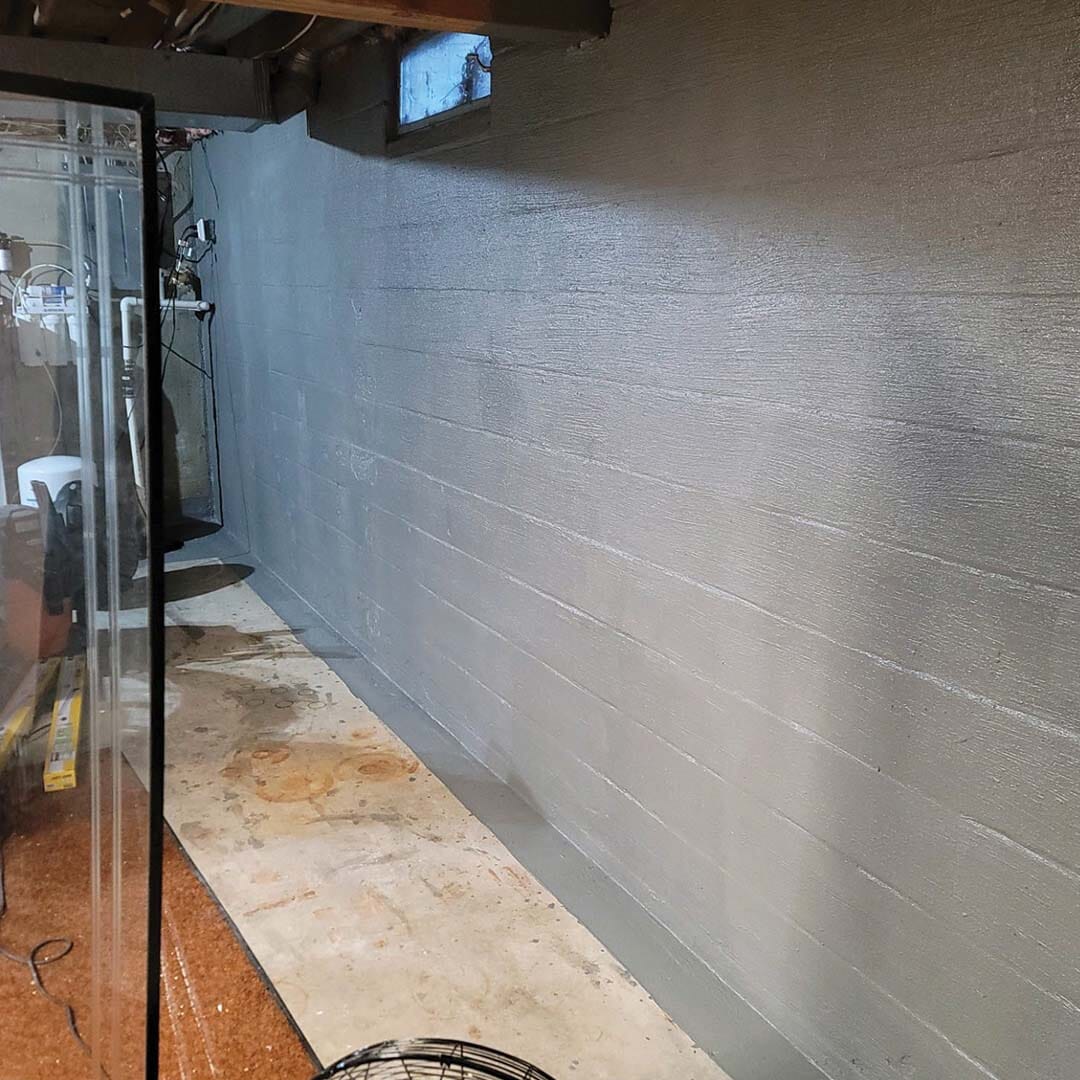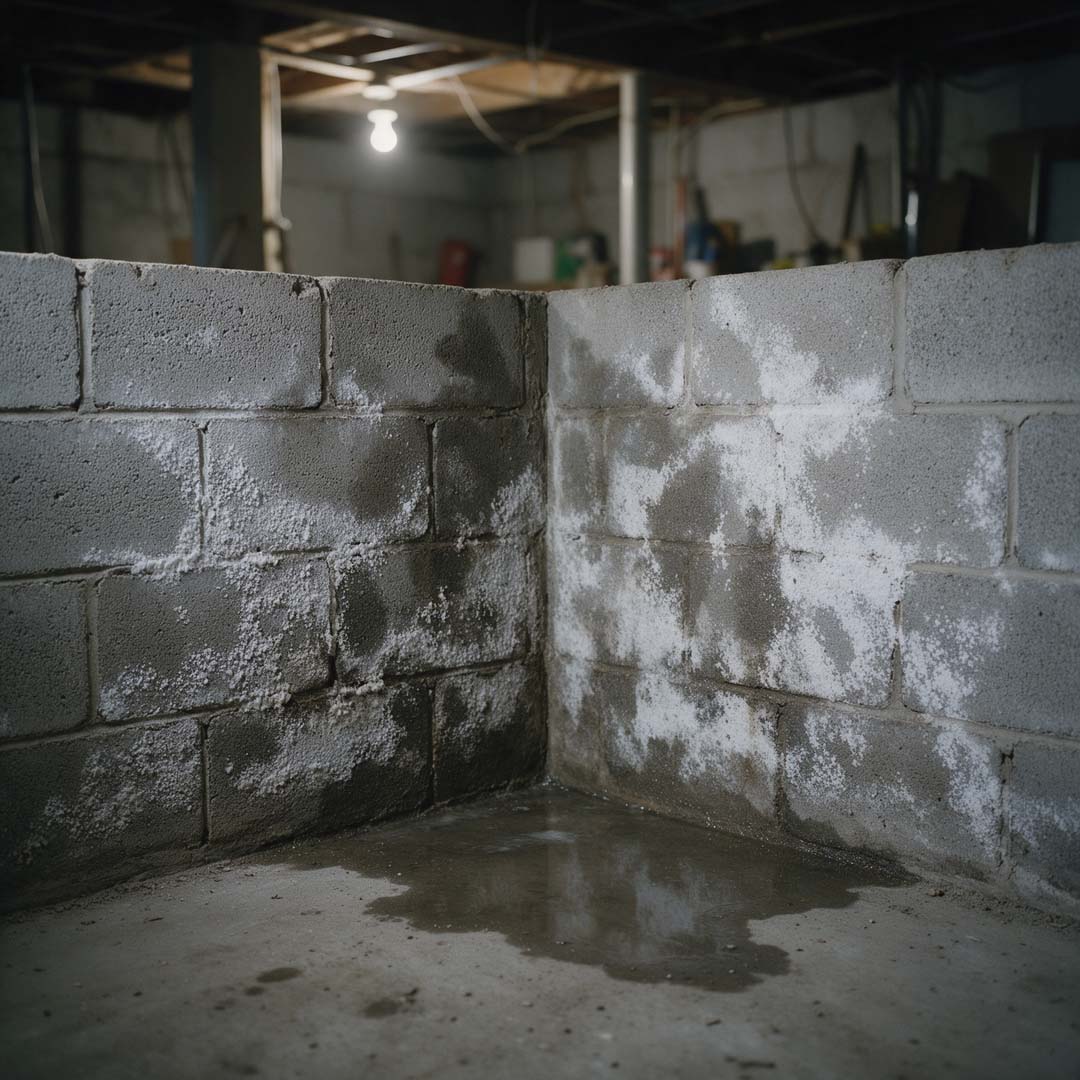

No type of drywall is actually waterproof. Not standard drywall, not green board, and not cement board. Every one of them is, at best, moisture-resistant: built to shrug off humidity and the occasional splash, not to hold back standing water or sit directly behind a shower spray zone. That distinction is where most DIY waterproofing jobs go wrong, and it's an expensive mistake to make after the tile is already up or the basement is already framed out. Below are the five drywall myths that trip up DIYers most often, what's actually true, and how to close the gap with a real waterproofing membrane instead of hoping the wall material does a job it was never built for.
In This Article
- Myth 1: Green board is waterproof
- Myth 2: Cement board doesn't need extra waterproofing
- Myth 3: A coat of waterproof paint seals drywall
- Myth 4: Wet drywall is fine once it dries out
- Myth 5: Taping and caulking the seams is enough
- FAQ

Myth 1: Green Board Is Waterproof
The truth: green board is water-resistant, not waterproof. Its green paper facing is treated so moisture beads on the surface instead of soaking in right away, which helps in a humid bathroom or laundry room. But that treatment only slows absorption, it doesn't stop it. Direct, repeated water contact, the kind a shower wall or tub surround sees every day, will eventually saturate the paper and break the board down from the inside. That's exactly why green board is not rated to sit directly behind tile in a shower or tub surround. It belongs on walls that get humidity, not walls that get sprayed.
Myth 2: Cement Board Doesn't Need Extra Waterproofing
The truth: cement board (also called backer board) resists swelling and breakdown far better than any gypsum-based product, which is why it's the standard substrate behind tile. But "resists water" is not the same as "waterproof." Water still travels through the joints between boards, through screw holes, and through the board's own porous surface to reach the framing behind it. That's why industry standards from the Tile Council of North America call for a separate continuous waterproofing membrane over backer board in every shower, steam room, and wet-area installation, not the board alone. Skip that layer and you're trusting rot and mold prevention to a material that was never rated to provide it. National Gypsum's own guidance confirms it: cement board needs a waterproofing layer on top.

A single-component, water-based liquid membrane that rolls on over drywall, green board, or cement board and cures into one continuous, flexible barrier, 234 PSI adhesion and 1,300% elongation, so it moves with the wall instead of cracking.
Myth 3: A Coat of Waterproof Paint Seals Drywall
The truth: a "waterproof" paint is a surface coating, not a membrane. At best it slows vapor from passing through the wall. What it doesn't do is bridge the actual failure points: taped seams, inside corners, screw heads, and the joint where the wall meets the floor. Paint films are also rigid once cured, so normal drywall movement (seasonal expansion, minor settling) cracks the film at exactly those joints, right where water is most likely to get in. A liquid membrane behaves differently because it's designed to stay flexible after it cures, so it stretches with the wall instead of splitting.
Myth 4: Wet Drywall Is Fine Once It Dries Out
The truth: gypsum core absorbs water like a sponge, and once it's saturated it starts losing structural integrity, it can sag, crumble at the edges, or lose its grip on the drywall screws. The paper facing on both sides is also an organic material, and mold can begin colonizing a wet paper surface within 24 to 48 hours of sustained moisture exposure. Drywall that looks dry on the surface after a leak can still be holding moisture inside the core, which is exactly why waterproofing it before a leak happens is cheaper than replacing it after.
Myth 5: Taping and Caulking the Seams Is Enough
The truth: drywall tape and a bead of caulk can hide a seam, but neither one is built to stretch. Inside corners, floor-to-wall joints, and any crack wider than about a quarter inch are exactly where a wall moves the most, and a rigid caulk line will eventually open back up at that same spot. The fix is to embed a fabric reinforcement strip directly into a wet coat of liquid membrane at every seam, corner, and joint before it cures. The fabric adds tensile strength so the membrane can flex without tearing, turning a straight line that's likely to crack into a reinforced joint that moves with the wall.


A woven fabric strip that embeds into wet Liquid Membrane at joints, corners, and cracks over 1/4 inch, the exact spots a coating fails first.
Frequently Asked Questions
Is drywall waterproof?
No. Standard drywall, green board, and cement board are all moisture-resistant at best, not waterproof. None of them are rated to hold back standing water or sit directly behind a shower spray zone without an added waterproofing membrane.
Is green board the same as waterproof drywall?
No. Green board is a moisture-resistant gypsum board meant for humid rooms like bathrooms and laundry rooms. It's not designed for direct water contact and shouldn't be used behind tile in a shower.
Do I need to waterproof cement board in a shower?
Yes. Cement board resists swelling better than drywall, but it's still not waterproof. Industry standards call for a separate waterproofing membrane over cement board in every shower or wet-area installation.
How do I actually waterproof drywall myself?
Roll a liquid-applied waterproofing membrane like SEMCO Liquid Membrane directly over the drywall, cement board, or green board, and embed fabric reinforcement into the wet membrane at every seam, inside corner, and joint before it cures. That combination creates one continuous, flexible barrier instead of relying on the wall material or paint alone.
Can SEMCO Liquid Membrane go directly over drywall?
Yes. Liquid Membrane can be applied directly over properly prepped drywall, green board, or cement board. Surface prep, cleaning, degreasing, and letting the surface dry, matters more to a good result than which board is underneath.
Stop Trusting the Wall to Do the Membrane's Job
SEMCO Liquid Membrane and Fabric Reinforcement turn any drywall, green board, or cement board wall into one continuous waterproof barrier, no rubber smell, no silicone-based coating, just a water-based membrane you can DIY in an afternoon.
Shop Liquid Membrane →Free shipping on orders over $99 to the contiguous 48 states.
Related reading: Do You Really Need to Waterproof Drywall? Every Question Answered · What Is a Liquid Waterproofing Membrane? The Complete Guide
Related reading: