
If your basement waterproofing is peeling, chalking, or the wall still feels damp after you coated it, the coating is failing, and it's rarely a one-off. It usually means the product wasn't flexible enough to move with the wall, wasn't applied over a fully prepped and dry surface, or was never designed to handle water pushing from the outside in. Here are the 7 warning signs to check for, what's actually causing each one, and what fixes it instead of just covering it up again.
In this article
- 1. Peeling or bubbling coating
- 2. Chalky white powder pushing through
- 3. The wall still feels damp or cold
- 4. The same crack keeps reopening
- 5. A musty smell or mold comes back
- 6. The coating has gone brittle or is cracking
- 7. Water pools at the floor-to-wall joint
- Strip it fully, or just patch it?
- FAQ
1. The Coating Is Peeling or Bubbling
What it means: Moisture is trapped behind the coating and has nowhere to go, so it pushes the film off the wall from underneath. This is the classic failure mode of a rigid, film-forming waterproof paint applied to a basement wall that still has hydrostatic pressure pushing water in from the soil side.
The fix: Scrape off the loose and bubbled areas back to sound concrete, let the wall dry fully, then recoat with a flexible, vapor-permeable membrane rather than a hard paint film. A membrane that stretches with the wall instead of sitting rigidly on top of it is far less likely to blister in the first place.
2. Chalky White Powder Is Pushing Through
What it means: That's efflorescence, mineral salts carried by moisture moving through the concrete that crystallize on the surface once the water evaporates. If it's coming through an existing coating, the coating isn't stopping water migration through the pores of the concrete itself.
The fix: Brush off the loose powder, address the moisture source if it's a known drainage issue, and recoat with a membrane rated for negative-side (interior) application, meaning it's designed to block water pushing from the exterior side of the wall, not just sit as a topical layer.
3. The Wall Still Feels Damp or Cold to the Touch
What it means: Either the coating was applied over a surface that wasn't fully dry, or it was applied too thin to form a continuous barrier, leaving pinholes where moisture keeps wicking through.
The fix: Confirm the wall is dry before recoating (a moisture meter helps here), then apply a minimum of two full coats at the manufacturer's stated thickness. A single thin coat is the most common reason a "waterproofed" wall still feels damp.
4. The Same Crack Keeps Reopening
What it means: A membrane coat alone flexes with the wall, but it can't bridge a crack or the floor-to-wall joint on its own once movement exceeds what the coating can stretch across without reinforcement.
The fix: Embed fabric reinforcement directly into a wet base coat over the crack before applying the finish coats. The fabric is what actually carries the load across the gap; the membrane on top keeps it sealed.
5. A Musty Smell or Mold Comes Back
What it means: Moisture is still migrating through the wall assembly even if you can't see standing water. A coating that traps moisture rather than blocking it can actually make this worse by keeping the wall assembly damp longer between wet periods.
The fix: Clean and treat any visible mold first, confirm there isn't an active bulk-water source (like a downspout dumping next to the foundation), then recoat with a membrane that's fully cured and forms a continuous barrier rather than a patchwork of thin or missed spots.
6. The Coating Has Gone Brittle or Started Cracking on Its Own
What it means: Basement walls expand and contract slightly with temperature and moisture changes. A rigid, low-flexibility coating can't keep up with that movement over years and eventually cracks on its own, even without a structural crack underneath it.
The fix: Strip the brittle coating where it's failed and recoat with a high-elongation membrane built to move with the wall long-term, rather than one more coat of the same rigid product.
7. Water Pools at the Floor-to-Wall Joint
What it means: The cove joint where the floor meets the wall is one of the most common entry points in a basement, and a coating that was only rolled up the wall without treating that joint leaves it exposed.
The fix: Embed fabric reinforcement into the cove joint itself, running it a few inches up the wall and out onto the floor, then coat over it. This is the same principle as reinforcing a crack, just applied to the joint where the two surfaces meet.
| Warning Sign | Likely Cause | Fix |
|---|---|---|
| Peeling or bubbling | Trapped moisture under a rigid film | Strip, dry fully, recoat with a flexible membrane |
| White chalky powder | Efflorescence migrating through the coating | Recoat with a negative-side rated membrane |
| Wall still damp | Applied too thin or over a damp surface | Confirm dry substrate, apply two full coats |
| Crack keeps reopening | No reinforcement bridging the movement | Embed fabric reinforcement, then coat over it |
| Musty smell or mold returns | Moisture still migrating through the wall | Treat mold, confirm no bulk water source, recoat fully |
| Coating gone brittle | Low-elongation product can't move with the wall | Strip and recoat with a high-elongation membrane |
| Water pools at the cove joint | Joint never reinforced, only the wall face was coated | Reinforce the joint with fabric, then coat over it |

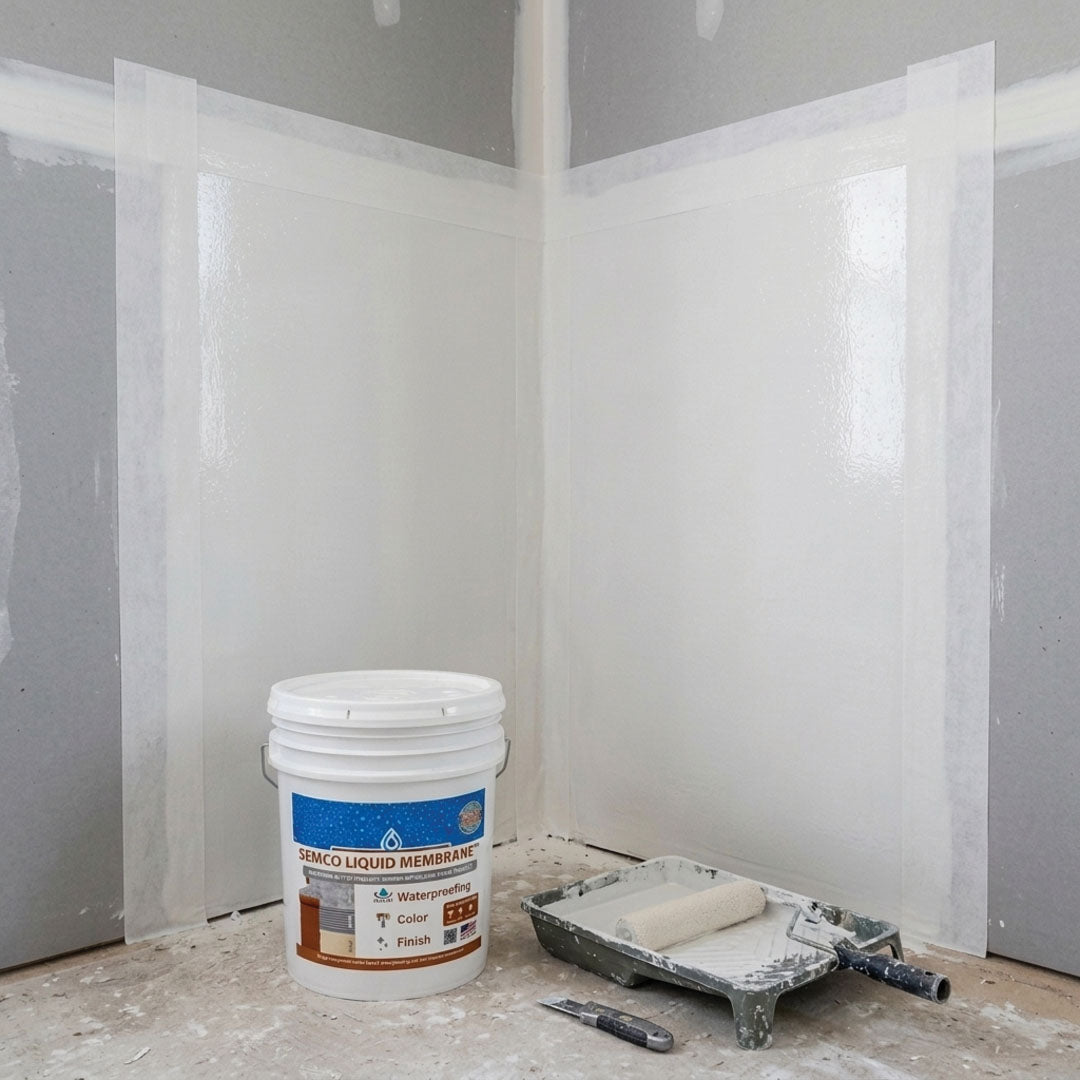
Negative-side capable, 1,300% elongation, rated for interior basement walls under active moisture pressure.

Embeds into wet membrane at cracks and the floor-to-wall cove joint, the two spots a coating alone can't bridge.
Strip It Fully, or Just Patch It?
Patch and recoat over the existing coating if it's sound everywhere except a small, isolated area, like one crack or one damp patch, and the rest of the wall is still bonded tight with no peeling or chalking. Strip the whole wall back to bare concrete if more than about 20 percent of the surface shows peeling, bubbling, or chalking, since that pattern usually means the product or the prep failed broadly rather than in one weak spot. Recoating over widespread failure just buries the same problem under a new layer. For the full walkthrough on prepping and coating a basement wall from scratch, see our guide on how to waterproof a basement from the inside, and if you're starting over and choosing a product for the first time, our guide to choosing a basement waterproofing membrane that won't fail covers what to look for before you buy.
Frequently Asked Questions
How do I know if my basement waterproofing has actually failed?
Look for peeling or bubbling, chalky white powder on the surface, a wall that still feels damp after coating, or a crack that keeps reopening. Any one of these means the coating isn't doing its job, not just that it needs to "cure a little longer."
Can I paint over a failing waterproof coating?
No. Paint isn't a waterproofing membrane, and applying it over a coating that's already peeling or chalking just adds another layer that will fail the same way. Scrape back to sound material first.
How long should a basement waterproofing membrane actually last?
A properly prepped and applied membrane rated for negative-side use should hold up for years without peeling or chalking. SEMCO Liquid Membrane carries a 5-year standard limited warranty, extending to 10 years on non-traffic surfaces.
Is a little efflorescence normal?
A very light dusting on bare, uncoated concrete is common and not necessarily a red flag. Efflorescence pushing through an existing coating means the coating isn't stopping moisture migration and needs to be addressed.
Do I need to remove all the old coating before recoating?
Only where it's failed. If most of the wall is still soundly bonded, you can patch and reinforce the failed sections. If failure is widespread, strip the full wall so the new coat bonds to concrete, not to a compromised layer underneath it.
Stop patching a coating that keeps failing
Strip it once, reinforce the joints and cracks, and recoat with a membrane built to move with the wall.
Shop Basement Waterproofing →Backed by a 5-year standard limited warranty (10 years on non-traffic surfaces).
Related reading:
- Liquid Rubber Alternatives: A Longer-Lasting Way to Waterproof
- Waterproofing Your Basement with SEMCO Liquid Membrane: The Ultimate Guide to a Dry, Mold-Free Space
- Basement Waterproofing Checklist: 7 Steps Before Fall Rains Hit
- Basement Waterproofing Membrane: How to Choose One That Won't Fail (2026 Buyer's Guide)