
The best alternative to generic liquid rubber is a single-component, water-based liquid waterproofing membrane that stays flexible, bonds to almost any surface, and is rated for permanent submersion. SEMCO Liquid Membrane is that alternative. It stretches up to 1300% of its original length, so it bridges cracks and movement instead of failing, goes on with a roller or brush, is low-VOC and UV-stable, and works on wood, concrete, metal, tile, fiberglass, and masonry, above ground or underwater. Below is how it compares to the other ways people waterproof, and how to choose the right one for your project.
In this article
- What are the main types of waterproofing?
- What are the best liquid rubber alternatives?
- Why choose a liquid membrane over generic liquid rubber?
- Is a liquid membrane better than a rigid masonry waterproofer?
- Is a liquid membrane better than a sheet membrane?
- Where does SEMCO Liquid Membrane work best?
- What should you watch out for before you start?
- Which waterproofing should you choose?
- Frequently asked questions
What are the main types of waterproofing?
Most DIY and pro waterproofing falls into five families, each with a different trade-off:
- Liquid rubber coatings: rolled or sprayed on to form a rubbery film. Flexible, but many are solvent-heavy, slow to cure, and not rated for constant water contact.
- Rigid masonry and cementitious waterproofers: paint-on or trowel-on products for concrete and block. Affordable, but rigid, so they can crack where the surface moves.
- Silicone and solvent-based coatings: strong water repellency, but stronger fumes, trickier cleanup, and limited recoat and adhesion windows.
- Sheet (peel-and-stick) membranes: rolls applied in overlapping strips. Durable in the field, but the seams and laps are the weak points and it is harder to detail around corners and penetrations.
- Single-component liquid membranes (like SEMCO): a seamless, flexible, water-based film that combines the flexibility of rubber with submersion rating and easy DIY application.
What are the best liquid rubber alternatives?
| Option | Flexibility | Works on | Submersible | UV-stable | Low odor / water-based | DIY-friendly |
|---|---|---|---|---|---|---|
| SEMCO Liquid Membrane | Up to 1300% | Wood, concrete, metal, tile, fiberglass, masonry | Yes (pools, fountains, ponds) | Yes | Yes, low-VOC | Yes, roller or brush |
| Generic liquid rubber coating | High | Varies by product | Often no | Varies | Often solvent-based | Usually |
| Rigid masonry / cementitious | Low (can crack) | Concrete and block only | Some | Yes | Usually | Yes |
| Silicone / solvent coating | Medium | Varies | Some | Varies | No, stronger fumes | Harder |
| Sheet / peel-and-stick | Medium | Flat surfaces | Some | Varies | Yes | Harder (seams) |
General category comparison. Always check the data sheet for any specific product you consider.
Why choose a liquid membrane over generic liquid rubber?
Generic liquid rubber and a single-component liquid membrane look similar in the can, but they behave differently once cured. The biggest gaps show up in three places: water contact, sunlight, and application. Many liquid rubber coatings are not rated for permanent submersion, can soften or stay tacky if applied too thick, and are solvent-based, which means fumes and harder cleanup. SEMCO Liquid Membrane is water-based and low-VOC, cleans up with soap and water, is fully UV-stable so it does not need a protective topcoat, and is rated for constant submersion once fully cured.

Water-based, up to 1300% flexible, UV-stable, and rated for full submersion. One product for decks, basements, pools, roofs, and more.
Is a liquid membrane better than a rigid masonry waterproofer?
Rigid masonry and cementitious waterproofers are inexpensive and fine on stable concrete, but they share one weakness: they do not move. When a foundation, deck, or wall expands, contracts, or settles, a rigid coating can crack and let water back in. A flexible liquid membrane with up to 1300% elongation stretches across hairline cracks and movement instead of breaking, which is why it holds up on surfaces that flex, such as wood decks, balconies, and roofs through freeze and thaw cycles. It also bonds to far more than concrete, including wood, metal, tile, and fiberglass.
Is a liquid membrane better than a sheet (peel-and-stick) membrane?
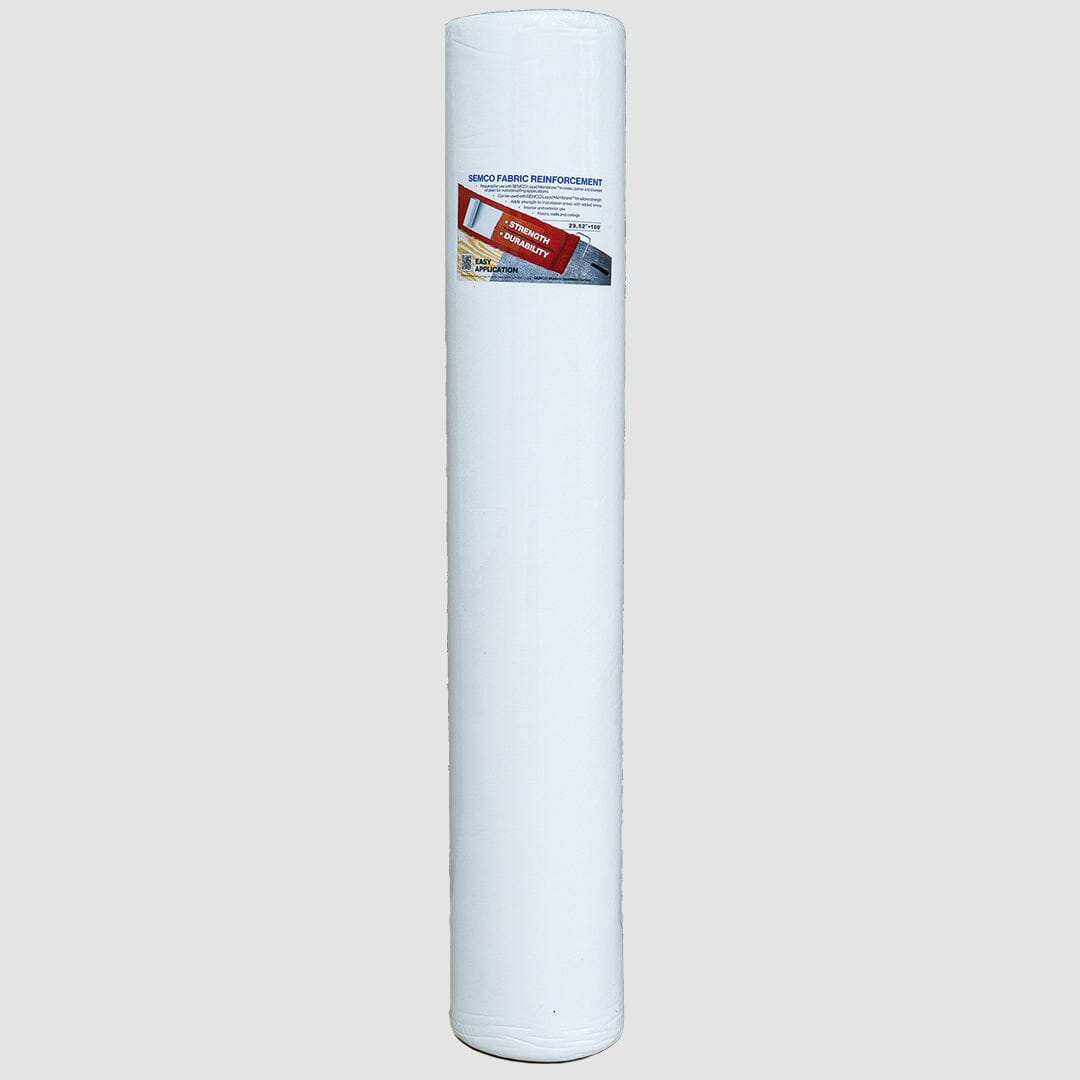
Sheet membranes are strong across a flat field, but every project has corners, drains, pipes, and edges, and those seams and laps are where sheet systems most often leak. A liquid-applied membrane goes on seamless, wraps details in one continuous film, and is far easier for a DIYer to install correctly. For extra strength at high-stress joints, SEMCO Fabric Reinforcement can be embedded between coats.
Where does SEMCO Liquid Membrane work best?
Because it is flexible, submersible, and bonds to almost anything, one product covers most household waterproofing jobs:
- Basements and foundations (interior moisture barrier or exterior)
- Wood decks and balconies
- Swimming pools, fountains, ponds, and water features
- Flat, tile, and metal roofs, plus RV roofs
- Showers before tiling, and CMU or cinder block walls
What should you watch out for before you start?
No coating performs without prep, and this is where most waterproofing fails. Make sure the surface is clean, sound, and dry, with moisture content at or below 3%. Apply the correct thickness: two coats to about 30 mil for above-ground work, and three coats to about 60 mil for anything submerged. Let it cure fully before water exposure, a minimum of 6 to 7 days for submerged applications. Full coverage runs about 200 to 250 square feet per gallon at two coats.
Which waterproofing should you choose?
If your surface never moves and is plain concrete, a rigid masonry product can work. If you need a durable field over a large flat area and can detail the seams well, a sheet membrane is an option. But if you want one flexible, water-based product that bonds to almost any surface, survives sunlight, handles submersion, and installs with a roller, a single-component liquid membrane is the most versatile choice. That is exactly what SEMCO Liquid Membrane is built for.
Frequently asked questions
What is the best alternative to liquid rubber for waterproofing?
A single-component, water-based liquid waterproofing membrane is the best all-round alternative, because it keeps the flexibility of rubber while adding UV stability, submersion rating, and easy cleanup. SEMCO Liquid Membrane offers up to 1300% elongation and works on wood, concrete, metal, tile, fiberglass, and masonry.
Is liquid membrane better than a rigid masonry waterproofer?
For any surface that moves, yes. Rigid masonry coatings can crack when the substrate expands or settles, while a flexible liquid membrane stretches and bridges the movement. Rigid products also only work on concrete and block, whereas a liquid membrane bonds to many surfaces.
Can a liquid membrane be used underwater?
Yes, when it is rated for it. SEMCO Liquid Membrane is applied in three coats to about 60 mil for submerged use and is left to cure fully (6 to 7 days) before filling, which is why it is used for pools, fountains, and ponds.
How long does liquid waterproofing membrane last?
Applied at the correct thickness over a properly prepared surface, it is a long-term solution. SEMCO Liquid Membrane carries a 5-year limited warranty, extended to 10 years on non-traffic surfaces.
Do I need a primer or topcoat?
SEMCO Liquid Membrane needs no separate primer, and because it is UV-stable it does not require a protective topcoat to survive sunlight. Good surface prep matters more than any primer.
Ready to waterproof it once and do it right?
One flexible, water-based membrane for decks, basements, pools, roofs, and more.
Shop SEMCO Liquid Membrane →Water-based, low-VOC, made in the USA. Free shipping over $99.
Related reading:
- Basement Waterproofing Membrane: Water-Based vs Silicone-Based vs Rubber-Based (Complete Comparison)
- Silicone-Based Waterproofing Coatings vs Water-Based Membranes: A DIYer's Guide
- Water-Based Membrane or Silicone-Based Coating: Which Belongs on a Metal Roof
- Water-Based vs Silicone-Based Basement Waterproofing: The Full Comparison