
Yes, you should reseal an RV roof before putting it into winter storage if it is showing cracks, chalking, soft spots, or is more than a few years past its last coat. The best window to do it is now, before temperatures drop below the coating's application range and before the first hard freeze finds every hairline crack for you. Below is a straight comparison of the two coating types RV owners actually choose between: rubber-based coatings (rubberized asphalt or polymer rubber, the category most liquid "rubber" roof products fall into) and water-based membrane coatings, so you can pick the right one before you're on the roof in November.
When Should You Reseal an RV Roof Before Storage?
RV maintenance guides generally recommend inspecting the roof at least twice a year, ideally before and after travel season, and watching for visible cracks or tears, discoloration from UV exposure, soft or spongy spots that signal water has already gotten in, and any mold or mildew growth. If you're parking the rig for winter, that pre-storage inspection is your last real chance to catch a small problem before months of freeze-thaw cycles turn it into a bigger one.
How often do RV roofs actually need recoating?
Rubber roofs (EPDM or TPO) are typically recoated every three to five years, while fiberglass roofs generally stretch to five to seven years between coats. Aluminum roofs need attention on a similar timeline, with extra watch for rust. Whatever material your roof is built from, a fresh membrane coat is what resets that clock.
Rubber-Based Coatings vs Water-Based Membrane: The Real Differences
Most rubber-marketed RV roof products are rubberized asphalt or polymer rubber coatings. They can work well, and plenty of RV owners report years of good service from them, but the category comes with a few consistent trade-offs worth knowing before you're standing on a 32-foot roof with a paint tray:
- Odor and cure time. Rubberized asphalt and solvent-carried rubber coatings tend to have a stronger odor during application and cure than water-based products, which matters if you're working solo in a driveway or storage lot near other vehicles.
- Surface prep is unforgiving. RV owner forums are consistent on this point: coatings that peel almost always trace back to inadequate cleaning or prep before the first coat, not the product itself.
- Recoat cycle. Because these coatings are built to flex with a rubber membrane, UV exposure over 3 to 5 years is the typical point where a recoat is due again.
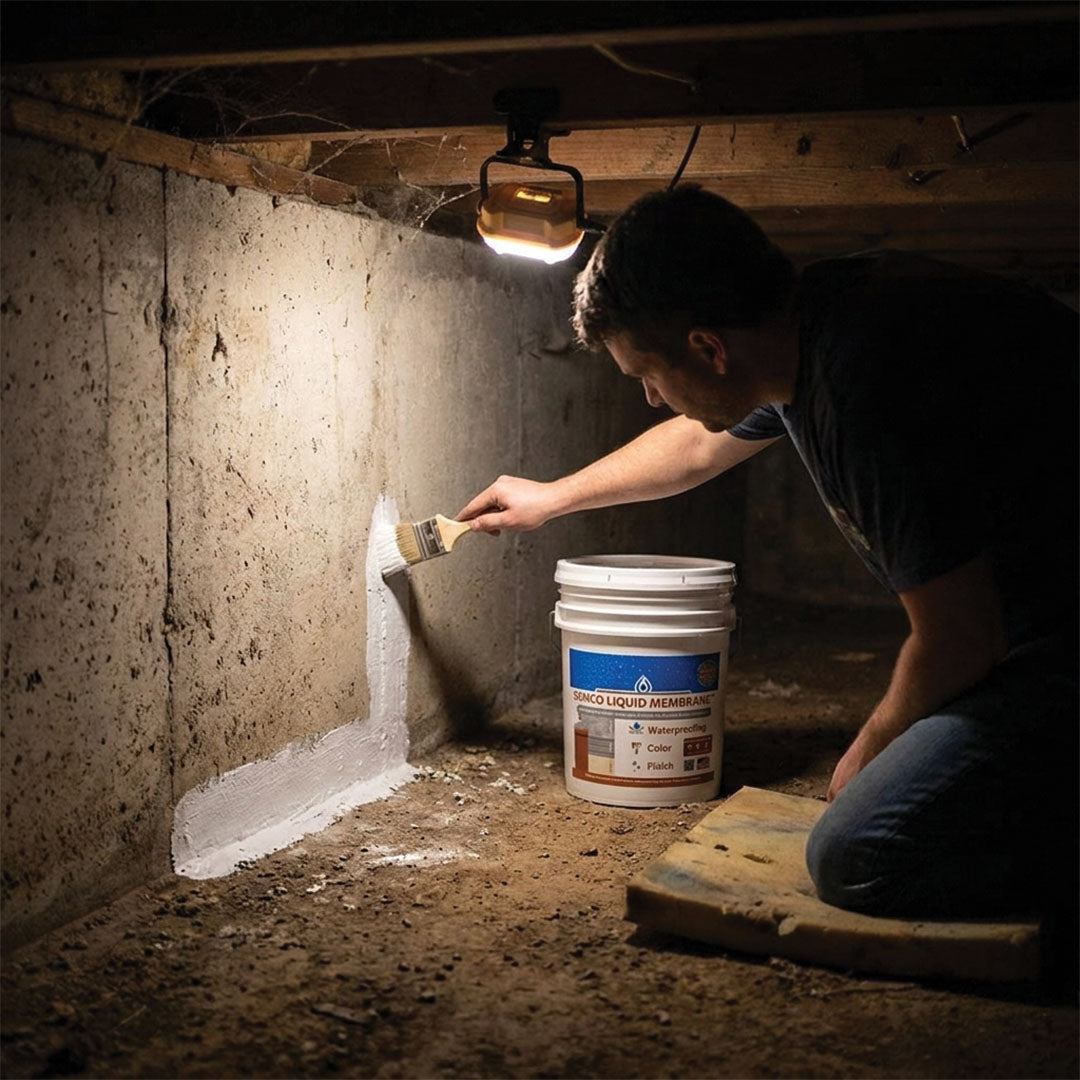
A single-component, water-based membrane is a different formulation entirely. SEMCO Liquid Membrane cures without the strong solvent odor of asphalt-based products, goes on with a roller or brush, and is rated for 234 PSI shear bond strength with 1300% elongation, meaning it stretches and moves with roof seams and expansion joints rather than sitting rigid on top of them.

Single-component, water-based membrane with 234 PSI shear bond strength and 1300% elongation. Starts at $26.80 for a 1-pint sample size, or $0.43/sq ft on a 5-gallon pail.
Rubber-Based vs Water-Based: Side by Side
| Factor | Rubber-based coatings | Water-based membrane (SEMCO Liquid Membrane) |
|---|---|---|
| Odor during application | Noticeable, solvent-type odor common to asphalt-based products | Low odor, water-based formulation |
| Flexibility / elongation | Built to flex with the membrane, varies by product | 1300% elongation rating |
| Typical recoat interval | Every 3 to 5 years on EPDM/TPO roofs | Manufacturer-rated for long-term exterior exposure; inspect annually |
| Cleanup | Often requires solvent for tools | Soap and water while wet |
| Application | Roller or brush | Roller or brush, single component (no mixing) |
How to Reseal Your RV Roof Before Storage
Step 1: Clean the roof thoroughly
This is the step RV owners most often shortcut, and the one that most often causes peeling later. Wash the entire roof with a roof-safe cleaner, rinse fully, and let it dry completely before you open a pail of anything.
Step 2: Reinforce seams, vents, and corners
Roof vents, skylights, AC units, and seams are where leaks actually start. Embed SEMCO Fabric Reinforcement into a first coat of Liquid Membrane around every penetration and seam before you coat the field of the roof. The fabric bridges small movement and cracking that a coating alone can't span.

Adds strength to load-bearing membrane areas like roof vents, seams, and corners. Available in 6" x 75' rolls from $60.15.
Step 3: Coat the full roof
Apply SEMCO Liquid Membrane across the full roof surface with a roller, working in manageable sections. Apply two coats, each at 15 to 20 mil, recoating once the first holds no fingerprint. Because it's single-component, there's no mixing ratio to get wrong, which matters when you're working alone on a ladder.
Step 4: Let it cure before storage
Give the membrane its full cure window before the RV sits under a cover or tarp, and before the first freeze. A coating that hasn't fully cured is more vulnerable to early cold-weather stress.
The Mistake Owners Make Most Often
Across RV owner forums, the pattern repeats: coatings that fail early almost never fail because of the product, they fail because of what happened (or didn't happen) before the first coat went on. Owners who report years of trouble-free service, four and five years in some cases, consistently describe thorough cleaning and prep as the difference. Skipping that step to save an afternoon is the single most common regret owners describe after a recoat goes wrong.
Frequently Asked Questions
How often should I reseal my RV roof?
Most rubber roofs need a fresh coat every 3 to 5 years, fiberglass roofs every 5 to 7 years, but inspect twice a year regardless of material and recoat sooner if you see cracks, chalking, or soft spots.
Can I apply a water-based membrane over an existing rubber roof?
Most EPDM and TPO roofs can be coated after proper cleaning and prep. Always check the substrate compatibility for your specific roof material before starting.
Does SEMCO Liquid Membrane smell strong during application?
No. It's a water-based formulation, so it does not carry the strong solvent odor common to asphalt-based rubber coatings, which makes it easier to work with in enclosed storage lots or shared driveways.
Can you paint over SEMCO Liquid Membrane once it's cured?
Yes, once fully cured it can be top-coated. Check current application guidance on the product page for compatible topcoats and cure times before painting over it.
Should I recoat before or after winter storage?
Before. Coating in cold temperatures can affect cure and adhesion, and a roof that goes into freeze-thaw season with existing cracks tends to come out of storage worse than it went in.
If you're weighing whether resealing is worth it before you park for the season, it's worth reading how a well-maintained roof affects resale value, and if you live in your rig full-time, our guide to year-round RV roof protection covers what changes when the roof never gets a storage season off.
Ready to reseal before the first freeze?
SEMCO Liquid Membrane and Fabric Reinforcement give you everything you need for a full RV roof recoat, from seams to the field of the roof.
Shop SEMCO Liquid Membrane →Made in the USA. Single-component, water-based, DIY-friendly application.
Related reading:
- Liquid Rubber Alternatives: A Longer-Lasting Way to Waterproof
- Basement Waterproofing Membrane: Water-Based vs Silicone-Based vs Rubber-Based (Complete Comparison)
- Silicone-Based Waterproofing Coatings vs Water-Based Membranes: A DIYer's Guide
- Water-Based Membrane or Silicone-Based Coating: Which Belongs on a Metal Roof