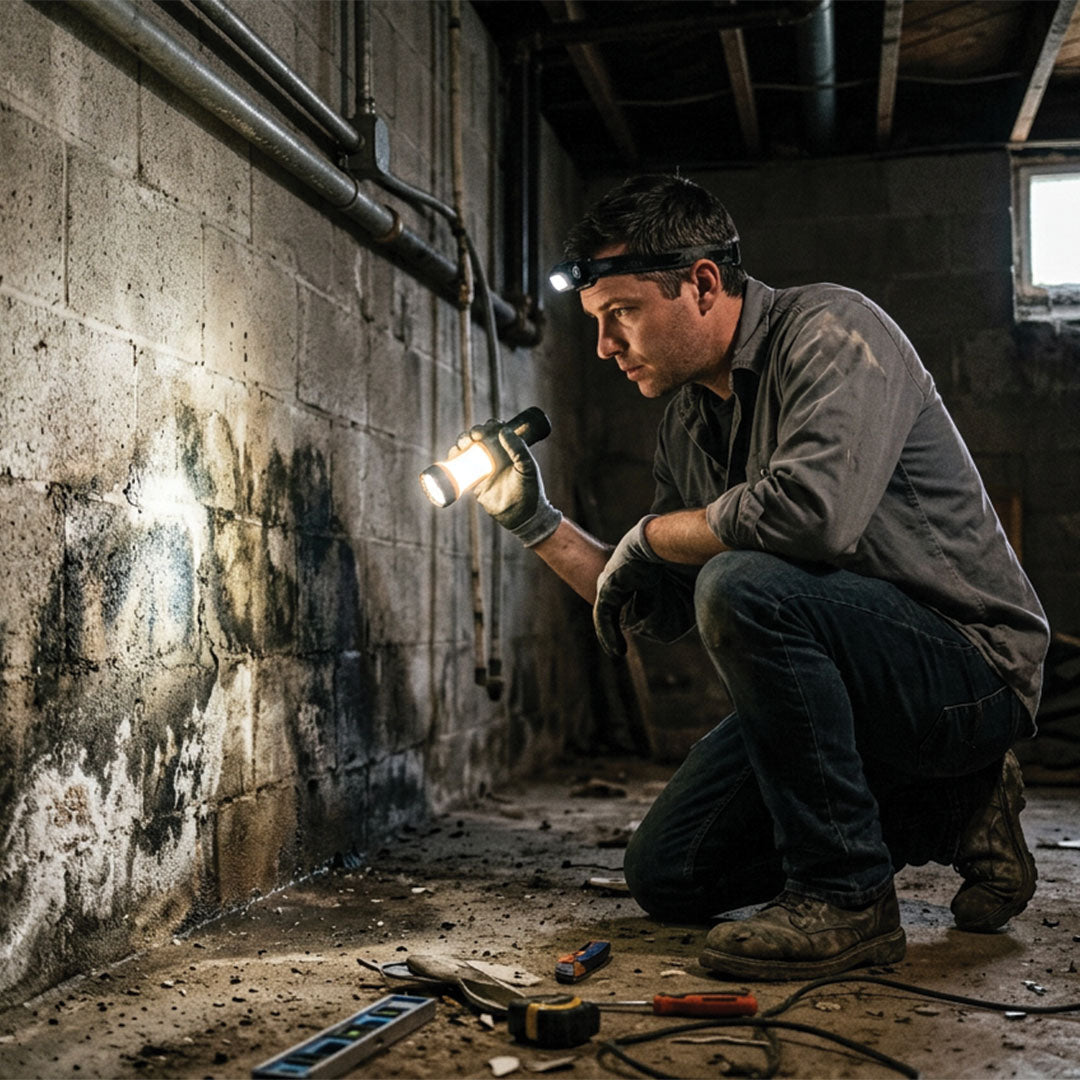

A strong tar or kerosene smell after waterproofing almost always means an asphalt-based or rubberized coating was used, and it's the naphthalene in that formulation you're smelling, not a sign your contractor did something wrong. It's still worth taking seriously if it lingers: naphthalene exposure is linked to headaches, dizziness, and nausea, and coal-tar-based waterproofing has been classified as a carcinogen. Water-based membranes are formulated around water instead of solvent as the carrier, which is why they're generally low-odor by comparison. Here's how to tell what you're dealing with and what to do about it.
In this article
- What causes that tar or kerosene smell after waterproofing?
- Is the smell dangerous, or just unpleasant?
- How odor compares across waterproofing types
- Does water-based mean odorless?
- What to do if the smell doesn't go away
- FAQ
What causes that tar or kerosene smell after waterproofing?
If a basement or crawlspace smells like mothballs, tar, or a sharp chemical odor after waterproofing, naphthalene is very likely the source. It's the primary volatile compound in coal tar and asphalt-based coatings, the same chemical historically used in mothballs, and it's what gives hot-applied rubberized asphalt and older bituminous membranes their signature smell. Hot-applied versions are heated to 375 to 400 degrees Fahrenheit for installation, using propane torches or kettles, which drives off more of that odor during and immediately after the job.

Is the smell dangerous, or just unpleasant?
It depends on concentration and duration. Short-term exposure during application, in a ventilated space, is a different situation than a smell that lingers for weeks in an occupied basement. Documented effects of naphthalene exposure include headaches, dizziness, nausea, and nose and throat irritation, and chronic lower-level exposure has been linked to more serious effects. Coal tar specifically is classified as a known human carcinogen by the International Agency for Research on Cancer, and some homes with older bituminous waterproofing have measured indoor naphthalene levels far above health guideline limits. That's a reason to ventilate any freshly waterproofed space regardless of which product was used, and to take a persistent smell seriously rather than waiting for it to fade on its own.
How odor compares across waterproofing types
Not every waterproofing product carries the same odor profile. In general terms, without pointing to any one brand:
| Coating type | Typical odor | Why |
|---|---|---|
| Hot-applied rubberized asphalt | Strong, tar-like | Heated to 375-400°F, releases more VOCs and naphthalene during application |
| Cold-applied, solvent-carried rubber-based coatings | Moderate, solvent-like | Solvent carrier evaporates as the coating cures |
| Silicone-based coatings | Generally low | Different cure chemistry, but can have specific ventilation and cure-time needs |
| Single-component water-based membrane | Low | Water is the carrier instead of a solvent, no open-flame heating step |
For a room-by-room look at how a silicone-based, ceramic-fortified coating compares to a water-based membrane specifically in a shower, including cure time and coat count, see our shower membrane comparison.

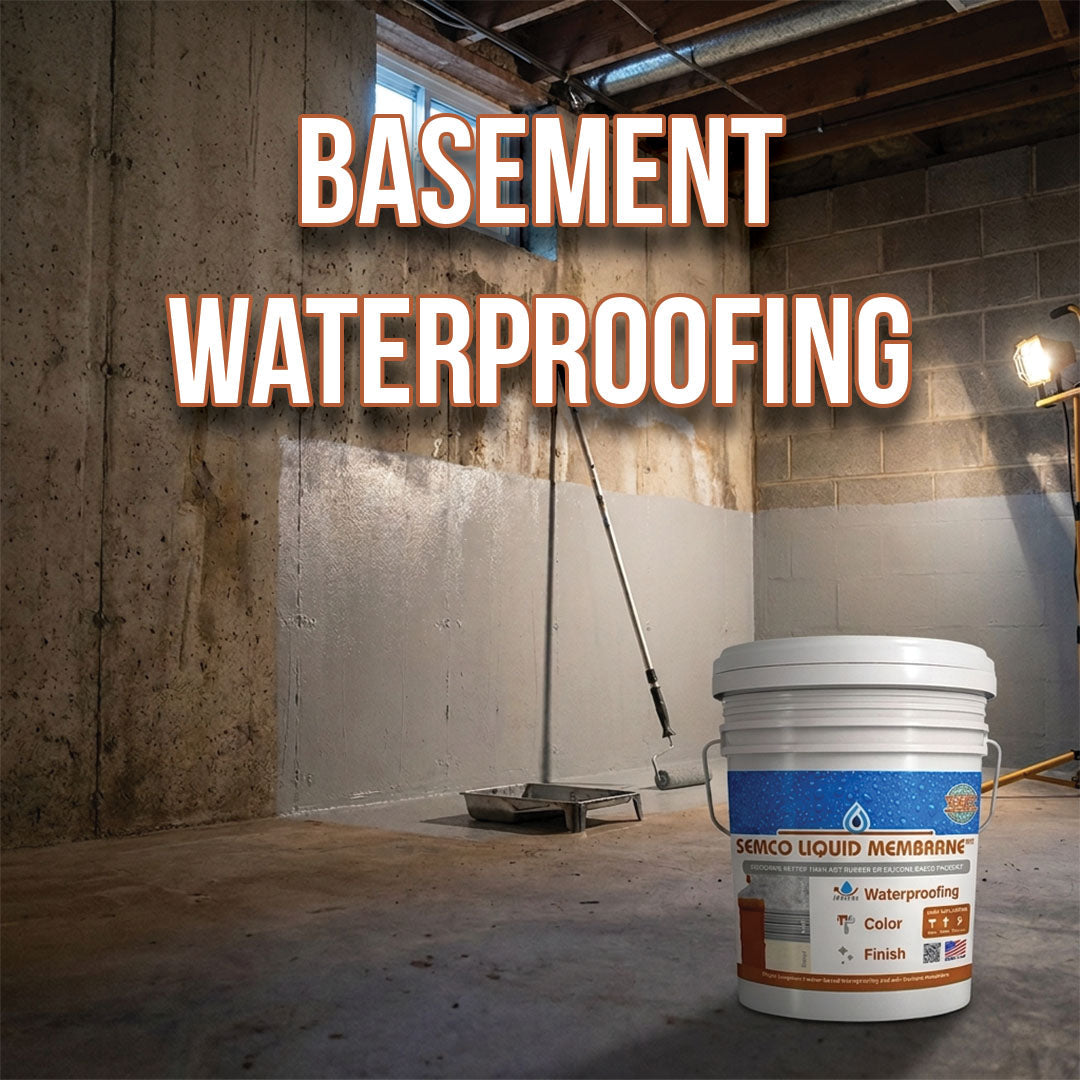
A single-component, water-based coat-color-seal membrane, cold-applied with no open flame or heating step.
Does water-based mean odorless?
Not necessarily odorless, but generally low-odor, and that comes down to chemistry rather than marketing. Water-based membranes use water as the carrier instead of a solvent, so there's less volatile organic compound content to off-gas as the coating dries, and no propane heating step to drive tar fumes into the air. SEMCO Liquid Membrane is formulated this way as a single-component, cold-applied system. Even so, ventilate any space you're coating, basement, crawlspace, or otherwise, while it cures. That's good practice with any coating, not a sign of a specific problem.
What to do if the smell doesn't go away
If a chemical or tar smell persists for more than a few days after waterproofing, start with ventilation: run a fan or dehumidifier with fresh air exchange, and avoid closing the space off completely for at least a week or two. If the smell was already there before any recent work, especially in an older home, it may point to a legacy coal-tar or bituminous membrane, and an indoor air quality professional can test for naphthalene and other VOCs. In documented cases, improving ventilation meaningfully reduced both the odor and measured air quality issues. If you're recoating over an old, strong-smelling membrane, a low-VOC water-based product can also help going forward, though it won't remove odor already trapped in surrounding materials like drywall or framing.
Frequently asked questions
Is it normal for a waterproofing membrane to smell?
Some smell during application and initial cure is normal for most coatings. A strong tar or solvent smell that lasts for weeks is not typical of a low-VOC, water-based product and is worth investigating.
How long does waterproofing smell usually last?
For most coatings, odor fades within days as the product finishes curing. Asphalt-based and coal-tar products can linger far longer, sometimes for weeks, especially in an enclosed basement with poor airflow.
Can waterproofing fumes make you sick?
Naphthalene exposure has been linked to headaches, dizziness, nausea, and irritation of the nose and throat, and heavier or longer exposure carries more serious documented risks. Ventilate the space and treat a persistent smell as something to address, not ignore.
Is water-based waterproofing membrane low odor?
Generally yes, because it uses water rather than a solvent as the carrier and doesn't require open-flame heating to apply. Still ventilate the space while it cures, as you would with any coating.
Want a waterproofing membrane that won't stink up the house?
SEMCO Liquid Membrane is single-component, water-based, and cold-applied.
Shop Liquid Membrane →Free shipping on orders over $99 in the contiguous US.
Sources: Indoor Doctor, tar waterproofing and indoor air quality; ATSDR ToxFAQs, naphthalene; W. R. Meadows, evolution of fluid-applied membranes. Related reading: Basement Waterproofing Membrane: How to Choose One That Won't Fail, Water-Based vs Silicone-Based Basement Waterproofing, Shower Waterproofing: Water-Based Membrane vs Silicone-Based Coatings.
Related reading: