
Dark staining on a basement wall is usually mold or mildew, but it isn't automatically the "toxic black mold" horror stories are built around. The CDC and EPA both say the same thing: you cannot tell a dangerous species from a harmless one just by looking at its color, so the right move isn't to panic or to send a sample to a lab, it's to find the moisture source, clean up what's there, and stop it from coming back. Here's how to tell what you're looking at, when it's a DIY job, and when it's time to waterproof for good.
In This Article
- What's actually on your wall: mold, mildew, or efflorescence
- Is black mold on concrete actually dangerous?
- Can you tell "toxic" mold apart just by looking at it?
- How much can you safely clean up yourself?
- When to call a professional instead
- How to stop it from coming back
- FAQ
What's Actually on Your Wall: Mold, Mildew, or Efflorescence?
Three different things get lumped together as "black mold" on a basement wall, and they call for different responses.
Efflorescence is a white or grayish powdery mineral deposit, not a fungus at all. It forms when water moves through concrete or block and evaporates, leaving salts behind. It's a moisture signal worth taking seriously, but it isn't mold and it won't make anyone sick.
Mildew is a surface fungus, usually thin, flat, and gray, white, or pale yellow before it darkens. It grows anywhere that stays occasionally damp and wipes off relatively easily.
Mold, including the greenish-black Stachybotrys chartarum species people mean when they say "toxic black mold," needs a more sustained moisture source and tends to penetrate porous material like drywall, wood, or the paper facing on some insulation rather than sitting only on the surface.

Is Black Mold on Concrete Actually Dangerous?
For most healthy people, mold exposure causes irritation, not a medical emergency. The CDC's guidance on mold and health lists nasal stuffiness, throat irritation, coughing or wheezing, and eye or skin irritation as the common reactions. People with mold allergies, asthma, or a compromised immune system can have more severe or faster-onset symptoms, and the CDC flags children and older adults as higher-risk groups too. That's a real reason to deal with it promptly, not a reason to assume the worst about a single damp patch.
Where it does need to be treated seriously: a basement being used as a bedroom, playroom, or home gym, HVAC returns or ductwork running through the affected area, or anyone in the household with asthma, a mold allergy, or a compromised immune system. In those situations, the health stakes of getting the cleanup and moisture fix right go up, even if the mold itself isn't a different species.
Can You Tell "Toxic" Mold Apart Just by Looking at It?
No, and this is the part most basement mold advice gets wrong. According to the EPA's guide to mold and moisture in the home, there's no practical way to distinguish a more harmful mold species from a common one without lab testing, and the EPA doesn't recommend routine testing for most home situations anyway. Their guidance is the same regardless of species: identify and fix the moisture source, and remove the mold. Spending money on a lab test rarely changes what you'd do next.
How Much Can You Safely Clean Up Yourself?
EPA guidance puts the DIY cutoff at roughly 10 square feet, about a 3-foot by 3-foot patch. Below that, on a hard, non-porous surface like bare concrete or block, most homeowners can handle it themselves:
- Ventilate the area and wear gloves, eye protection, and an N95-style mask.
- Scrub the surface with water and plain detergent, not bleach on porous material, since bleach doesn't reach mold growing inside the pores of drywall, wood, or masonry the way it does on tile or glass.
- Let it dry completely before you assess whether staining remains, and before you apply anything over it.
- Bag and dispose of any porous material (drywall, insulation, cardboard) that stayed wet for more than 24 to 48 hours rather than trying to clean it.
None of this fixes the reason it grew back there in the first place. That's the moisture problem, and it's the part waterproofing actually solves.
When to Call a Professional Instead
Call a mold remediation professional if the affected area is larger than roughly 10 square feet, if it's inside HVAC ductwork, if it keeps returning after you've cleaned and dried the area, or if anyone in the house has asthma, a mold allergy, or a compromised immune system. A remediation pro has containment and air-handling equipment a homeowner doesn't, which matters more once the area gets larger than a small patch.
This is also the point to be honest about the moisture source. If you're seeing recurring staining every few months despite cleaning it, that's usually a sign of an active leak, poor grading, or a foundation crack rather than just humidity, and it's worth running through our full basement waterproofing checklist before you clean and coat the same spot a third time.
How to Stop It From Coming Back Before You Waterproof
Mold needs sustained moisture, so once the wall is clean and fully dry, the job is closing off whatever's feeding it. Two things matter most: relative humidity and vapor coming through the concrete itself. The EPA and CDC both recommend keeping indoor relative humidity under 50 percent to inhibit mold growth, and a basement sitting below grade, surrounded by damp soil, will push moisture through concrete by vapor diffusion even without a visible leak or crack.
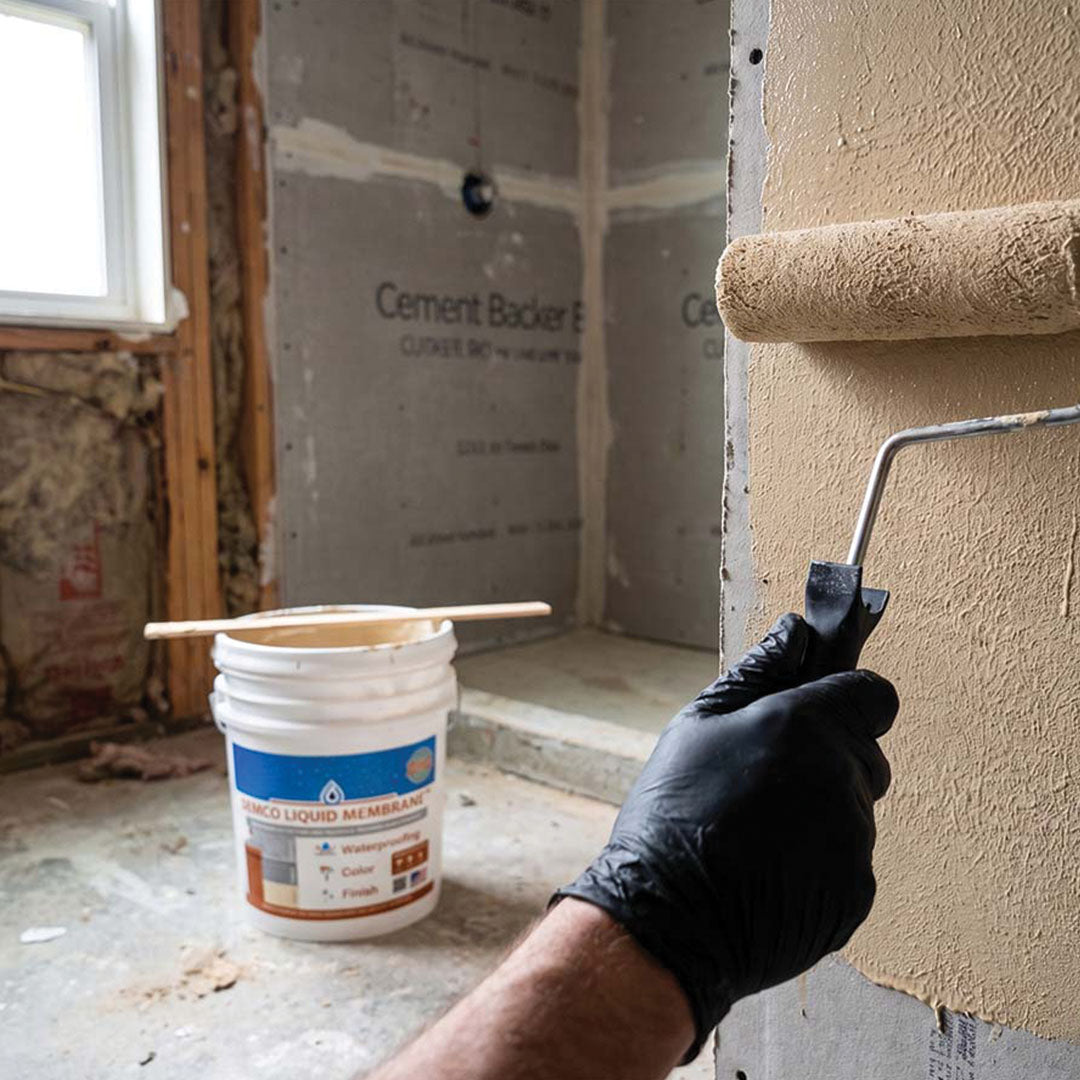
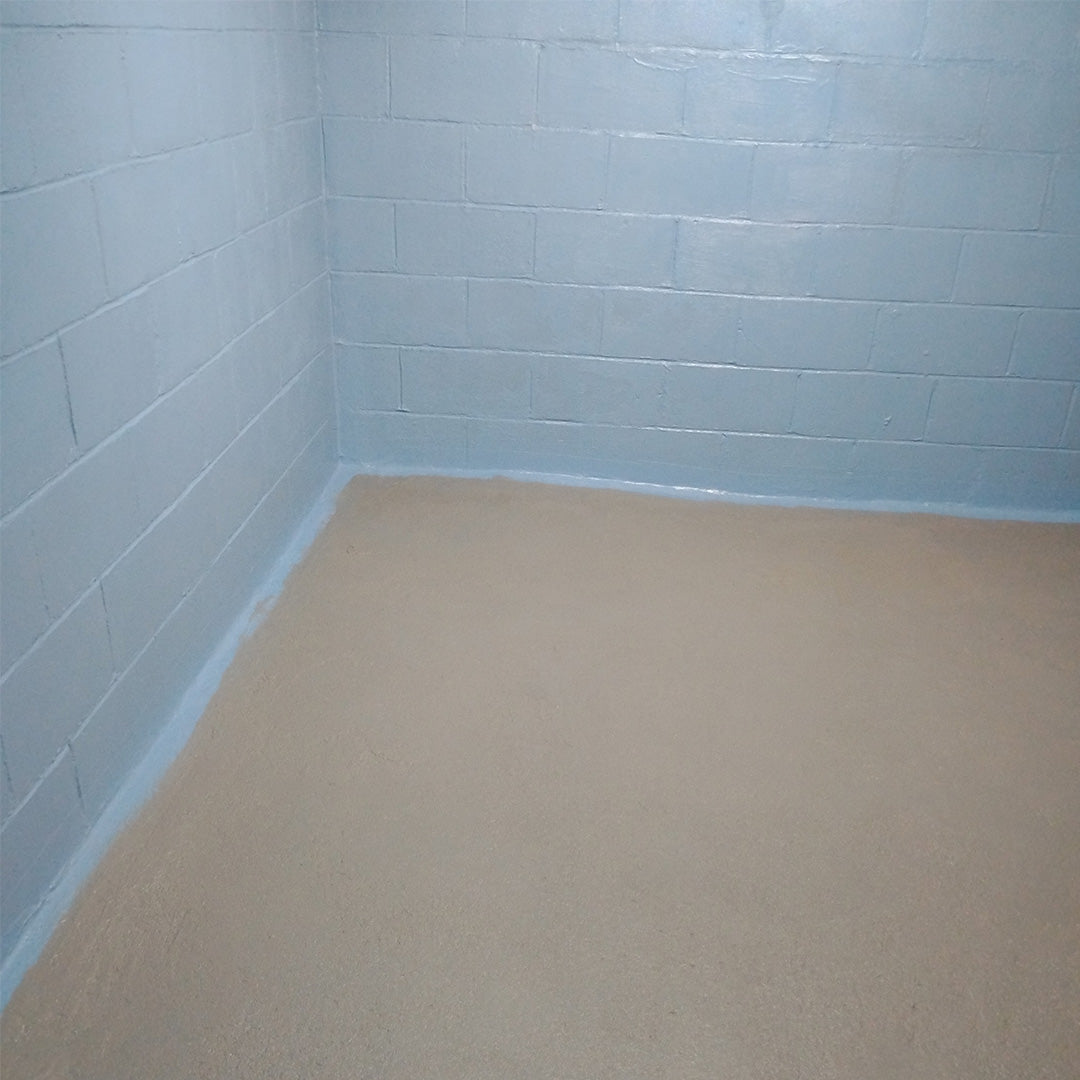
A liquid-applied, water-based membrane rated for vapor transmission addresses that second part directly, sealing the wall against ongoing moisture intrusion after the surface mold is gone, rather than just covering a clean wall and waiting to see what grows back.

1,300% elongation, 400+ PSI adhesion, rated to 10 PSI vapor transmission, reduces RH up to 75%. Low odor, soap-and-water cleanup, once the wall is clean and dry.
If you're weighing whether a DIY membrane or a professional waterproofing crew makes more sense for the scope of your basement, our basement waterproofing cost breakdown lays out the real price gap between the two, and when paying for a professional is worth it.
Frequently Asked Questions
Is black mold in a basement always dangerous?
Not automatically. For most healthy people it causes irritation symptoms like a stuffy nose, cough, or itchy eyes rather than a serious illness. People with asthma, mold allergies, or a compromised immune system are at higher risk of more severe reactions, per CDC guidance.
How can I tell if it's mold, mildew, or efflorescence?
Efflorescence is a white, powdery mineral deposit, not a fungus, and it won't wipe off with a damp cloth the way surface mildew will. Mold tends to be darker, fuzzier, and more likely to have soaked into a porous surface rather than sitting on top of it.
Can I tell if it's "toxic" mold just by its color?
No. The EPA is explicit that there's no practical way to distinguish a more harmful mold species from a common one by sight, and recommends treating any mold growth the same way: fix the moisture, remove the mold.
How much mold can I safely clean up myself?
EPA guidance puts the do-it-yourself threshold at roughly 10 square feet, about a 3-foot by 3-foot patch, on a hard, non-porous surface. Beyond that, or if it's inside HVAC ductwork, call a remediation professional.
Will waterproofing the wall get rid of mold that's already there?
No. Clean and fully dry the wall first. A waterproofing membrane stops future moisture from feeding new growth, it isn't a mold cleaner and shouldn't be applied over an active, unaddressed mold problem.
Does painting over mold stop it from coming back?
Not on its own. Standard paint doesn't address the vapor and moisture moving through the wall, so mold typically returns unless the underlying humidity or water intrusion is fixed, ideally with a vapor-rated waterproofing membrane once the surface is clean.
Ready to check your basement?
Clean it, dry it, then seal it. SEMCO Liquid Membrane closes off the moisture that brings mold back, low odor and soap-and-water cleanup.
Shop Basement Waterproofing →Free shipping on orders over $99. 5-year standard limited warranty.
Sources: CDC, Mold and Health; EPA, A Brief Guide to Mold, Moisture, and Your Home. Related reading: Basement Waterproofing Checklist: 7 Steps Before Fall Rains Hit, What a Basement Waterproofing Membrane Really Costs.