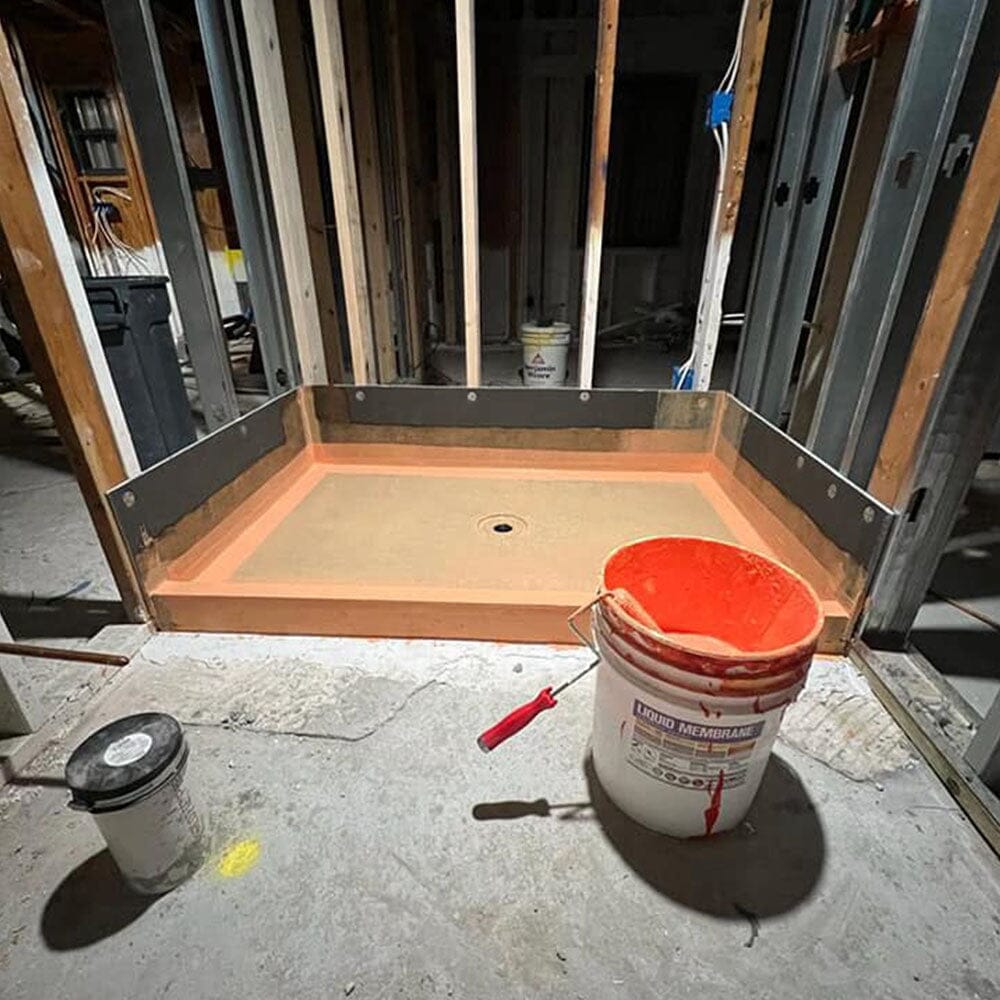

If water is coming in around a window every time it rains, the window itself is rarely the problem. In most cases the glass and frame are fine, but the seal between the frame and the wall (the caulk, flashing, or old sealant) has failed. You can fix that from the outside with a flexible, paintable waterproofing membrane in an afternoon, without pulling the window or paying for a replacement.
In this article
- Why is my window leaking when it rains?
- Do I need to replace the window, or just reseal it?
- What you'll need
- How to waterproof a window from the outside, step by step
- Should you add fabric reinforcement around the frame?
- Caulk vs. a liquid membrane
- How is this different from a new-construction window box?
- How long will this fix last?
- FAQ
Why Is My Window Leaking When It Rains?
Water almost always gets in through the gap between the window frame and the surrounding wall, not through the glass itself. A few common causes:
- Failed caulk. Standard exterior caulk shrinks, cracks, and loses elasticity within a few years, especially through freeze-thaw cycles.
- Movement between materials. Wood, vinyl, and masonry expand and contract at different rates. A rigid sealant can't keep up and eventually splits along the joint.
- Missing or damaged flashing. If flashing above the window was installed poorly (or wasn't installed at all), wind-driven rain runs straight down behind the trim.
- Porous wall material. Stucco, brick, and block are naturally porous and can wick water toward the window opening during heavy or sustained rain.
A quick way to confirm it's the seal and not the window: run a hose over the top and sides of the frame from outside (not directly at the glass) for a few minutes while someone watches inside. Water showing up around the interior trim within a few minutes points to the frame seal, not the sash or glass.

Do I Need to Replace the Window, or Just Reseal It?
Replace the window if the frame itself is rotted through, the glass seal has failed (fogging between panes), or the sash won't operate properly. Reseal it if the frame and glass are sound and the leak is limited to the perimeter joint, which covers the large majority of "leaking window" complaints in homes more than a few years old. Resealing with a flexible membrane instead of standard caulk also solves the underlying problem: caulk fails again because it can't stretch with the building; a membrane rated for high elongation moves with it.
What You'll Need
- A stiff brush or scraper to remove old, cracked caulk and any loose paint or debris
- Mild cleaner and a rag (surface needs to be clean and dry before coating)
- SEMCO Liquid Membrane, a paintable roll-on waterproofing membrane
- Fabric Reinforcement for any gaps wider than a hairline crack or corners where movement is likely
- A disposable brush or roller
- Painter's tape to keep the line clean against trim or glass
How to Waterproof a Window From the Outside, Step by Step
Step 1: Strip the old sealant
Scrape or cut out cracked, brittle caulk along the full perimeter of the frame. Any old sealant left behind can stop the new coating from bonding properly.
Step 2: Clean and dry the surface
Wipe down the frame and surrounding wall material to remove dust, chalk, and mildew. Let it dry completely. SEMCO Liquid Membrane bonds to wood, vinyl, stucco, brick, concrete, and metal without a primer, but it still needs a clean, dry surface to grip.
Step 3: Bridge any gaps with fabric reinforcement
For gaps wider than a hairline crack, corners, or the joint where two different materials meet, press a strip of fabric reinforcement into a first coat of wet membrane before it skins over. This gives the membrane something to bridge across instead of stretching over open space.
Step 4: Apply the first coat
Brush or roll SEMCO Liquid Membrane evenly around the entire frame, extending a couple of inches onto the surrounding wall surface on all sides. Let it dry for about an hour.
Step 5: Apply a second coat
A second coat closes any pinholes and builds the membrane up to full thickness for a seamless, flexible barrier that moves with the building instead of cracking.
Step 6: Let it cure before the next rain
Give the membrane the manufacturer's recommended cure window before it faces a hard rain. It's a single-component, water-based formula, so cleanup is soap and water, not solvent.
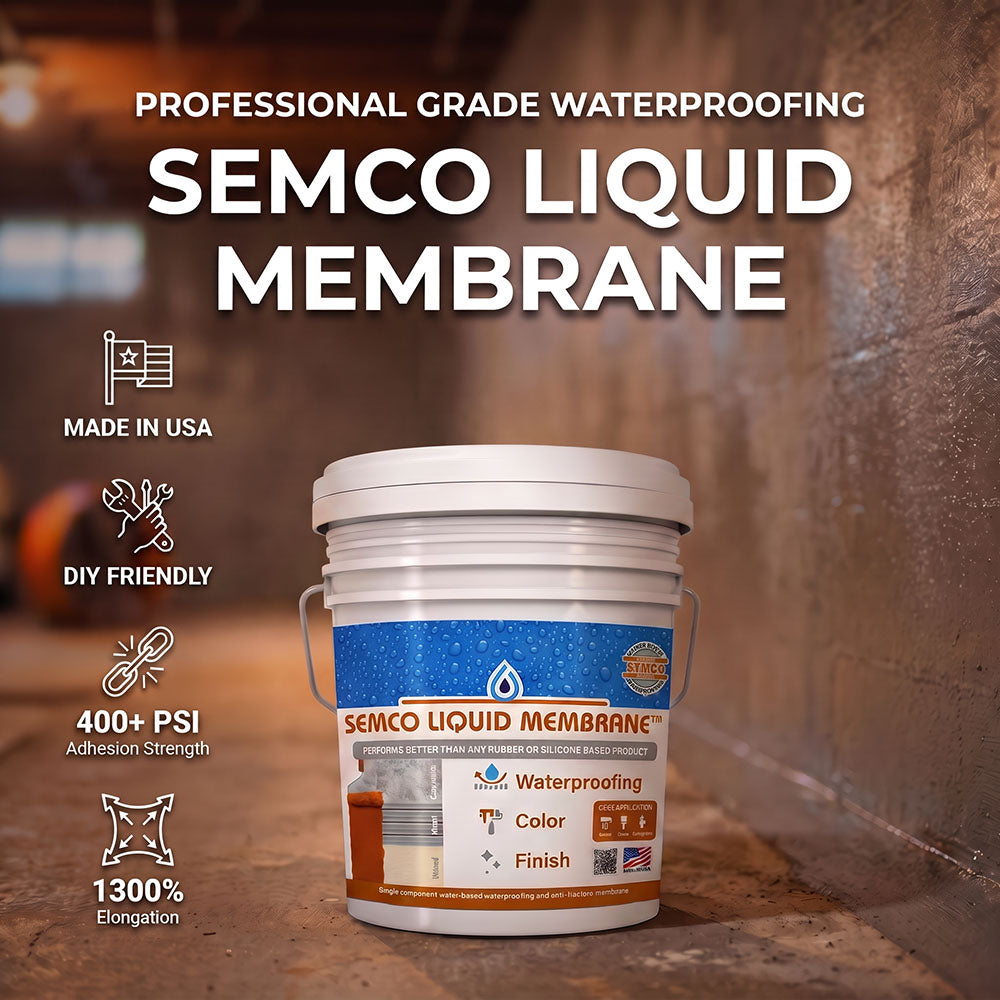
Single-component, water-based, paintable membrane. Flexible enough to stretch with the building instead of cracking like old caulk. 15 colors available.
Should You Add Fabric Reinforcement Around the Frame?
Add it wherever there's real movement or a gap, not just a hairline crack: corners of the frame, the joint between two different wall materials (say, wood trim meeting stucco), or any spot wider than about 1/16 inch. The fabric gives the membrane a physical bridge to grab onto, so the coating flexes across the gap instead of stretching thin over open space and eventually failing at the weakest point. Skip it on tight, uniform joints where the membrane alone will bond cleanly.

Embed it into a wet coat of Liquid Membrane to bridge gaps, corners, and joints between different materials.
Caulk vs. a Liquid Membrane: Which Actually Stops the Leak
| Criteria | Standard exterior caulk | SEMCO Liquid Membrane |
|---|---|---|
| Flexibility | Shrinks and stiffens within a few seasons | Stretches and moves with the building |
| Coverage | A thin bead along the joint line only | A continuous coating over the joint and surrounding surface |
| Gap bridging | Struggles with wide or irregular gaps | Bridges gaps when paired with fabric reinforcement |
| Maintenance | Typically needs re-caulking every 1 to 3 years | Built for long-term exterior exposure |
| Cleanup | Varies by formula, some require solvent | Water-based, soap and water cleanup |
How Is This Different From Waterproofing a Window Box in New Construction?
If you're building a new window opening in a block or masonry wall, that's a different job with its own guide: see how to waterproof a window box during new construction. This post is for the far more common situation: a window that's already installed, already trimmed out, and already leaking. The prep is different (you're removing old, failed sealant instead of coating bare framing), but the same membrane does the job in both cases. If you're weatherproofing the rest of the exterior at the same time, our guide to sealing walls and windows against air and moisture covers the whole envelope, not just the window opening.
How Long Will This Fix Last?
A properly prepped, two-coat application is meant to be a long-term fix rather than a seasonal patch, because the membrane is built to flex with the building instead of drying out and cracking the way standard caulk does. How long it holds up in practice still depends on surface prep, your climate, and how much direct sun and movement that spot sees, so treat any specific lifespan claim with that in mind and inspect it during your annual gutter or roof check.
Frequently Asked Questions
Can I waterproof a window without removing the trim?
Yes. You're coating the joint between the frame and the wall, not disassembling the window. Just make sure old caulk is fully removed first so the new membrane bonds directly to the frame and wall surface.
Will this work on stucco and brick, not just wood-framed windows?
Yes. SEMCO Liquid Membrane bonds to wood, vinyl, stucco, brick, concrete, and metal without needing a separate primer, which matters around windows since the frame and the wall are often two different materials meeting at the same joint.
Do I need to paint over it afterward?
Not for waterproofing. SEMCO Liquid Membrane comes in multiple colors, so many homeowners choose a shade close to their trim and leave it as the finish coat. Check the current color options on the product page before you start.
What if the leak is coming from above the window, not the sides?
That usually points to missing or damaged flashing rather than a sealant problem. Coating the joint will still help, but if water is tracking down from a roofline or siding detail above the window, that flashing issue needs to be addressed too or the leak will keep finding a new path in.
How is this different from just using more caulk?
Caulk is a bead along one line. A liquid membrane is a continuous coating across the whole joint and the surrounding surface, and it's rated to stretch with the building instead of stiffening and cracking the way caulk does after a season or two.
Stop Re-Caulking the Same Window Every Year
SEMCO Liquid Membrane gives you a flexible, paintable waterproof seal that moves with your home instead of cracking against it.
Shop SEMCO Liquid Membrane →Free shipping on orders over $99 to the 48 contiguous states.
Related reading:
- How to Waterproof Window Boxes: Complete Guide to Window Waterproofing Solutions
- GUIDE TO HOW TO WATERPROOF A WINDOW BOX
- How to Waterproof a Window Box: Proven Window Waterproofing Solutions for New Construction
- Weatherproof Your Exterior: How SEMCO Liquid Membrane Protects Walls and Windows from Air and Moisture