
No plywood is waterproof out of the box, even the sheets labeled "exterior grade." Exterior and marine plywood use water-resistant glue between the layers, so the glue bond won't fail in the rain, but the wood itself still soaks up water at every cut edge, screw hole, and exposed face. If you want plywood that actually sheds water over years outdoors (a deck substrate, a window box, a planter, a shed roof, a camper subfloor) you need to seal every face and edge with a flexible waterproof coating, not just pick a "waterproof-sounding" sheet off the rack.
In this article
- Is any plywood actually waterproof?
- What happens when unprotected plywood gets wet
- How to waterproof plywood for outdoor use
- How many coats does plywood need?
- Does this work for subfloors, planters, and window boxes?
- FAQ
Is Any Plywood Actually Waterproof?
Not on its own. "Waterproof plywood," "marine plywood," and "exterior plywood" are all names for sheets glued with a water-resistant adhesive (usually phenolic resin) so the layers won't delaminate when they get wet. That's a real and useful property. It is not the same as being waterproof. The wood fibers themselves are still porous. Leave a cut edge, a screw hole, or a scuffed face exposed to weather for a season and it will absorb water, swell, and eventually start to rot or delaminate at that point, regardless of the grade stamped on the sheet.
That's why boat builders, deck framers, and anyone building something that lives outdoors treat the plywood grade as the starting point, not the finish. The actual waterproofing happens in a coating applied after the sheet is cut and installed.
What Happens When Plywood Gets Wet and Isn't Protected
Three things show up, usually in this order:
- Edge swelling. Cut edges and corners have no glue-line protection, so they're the first place water gets into the inner plies.
- Delamination. Once water works between layers, the veneers separate, and the panel loses most of its strength right at that spot.
- Rot and soft spots. Sustained moisture feeds fungal decay, which is what turns a solid subfloor or deck frame soft and spongy within a season or two.
Screw holes and any spot where the factory face has been sanded, routed, or scuffed during installation are just as vulnerable as a cut edge, and they're easy to forget when you're only thinking about "waterproofing the deck" in the abstract.
How Do You Actually Waterproof Plywood for Outdoor Use?
The method is the same whether you're coating a shed roof deck, a planter box, a window box, or the subfloor under a tiled shower:
- Sand the surface. SEMCO's surface prep guide calls for a 60-grit sand on raw wood and plywood, no cleaner needed. This opens the grain so the coating can actually bond instead of sitting on a sealed factory finish.
- Seal every edge, not just the faces. Cut edges, screw holes, and corners absorb water fastest, so coat them as carefully as the flat faces.
- Apply a flexible, water-based membrane in thin, even coats. A ½ inch nap roller or brush works for most panel sizes. Thick coats trap moisture underneath and stay tacky, so thin and even beats one heavy pass.
- Recoat on the same-day window. Once a coat takes no fingerprint and leaves no residue (roughly 25 to 45 minutes at 72°F), it's ready for the next coat the same day.
- Plan on three coats for bare wood, each at 15 to 20 mil. Raw plywood drinks the first coat before it starts building a film, so budget for an extra pass compared to a non-absorbent surface like metal or cured concrete.
- Let it cure fully before water exposure or a topcoat. Seven days minimum, longer in cool or humid weather, before the piece gets rained on, submerged, or walked on.

A single-component, water-based elastomeric membrane that bonds directly to wood, including cut edges and screw holes, with no primer step.
How Many Coats Does Plywood Need?
Figure on roughly 100 sq ft per gallon for bare or raw plywood at three coats, compared to about 200 sq ft per gallon on a non-absorbent surface at two coats. The gap is the wood itself: the first coat mostly disappears into the grain rather than building film thickness, so it isn't doing much protective work on its own. Coat board edges and end grain specifically. They're small, but they're where failures start.
Does This Work for Subfloors, Planters, and Window Boxes?
Yes, with the same prep and coat count, because the failure mode is identical: an absorbent wood surface meeting standing or repeated water. A few notes by use case:
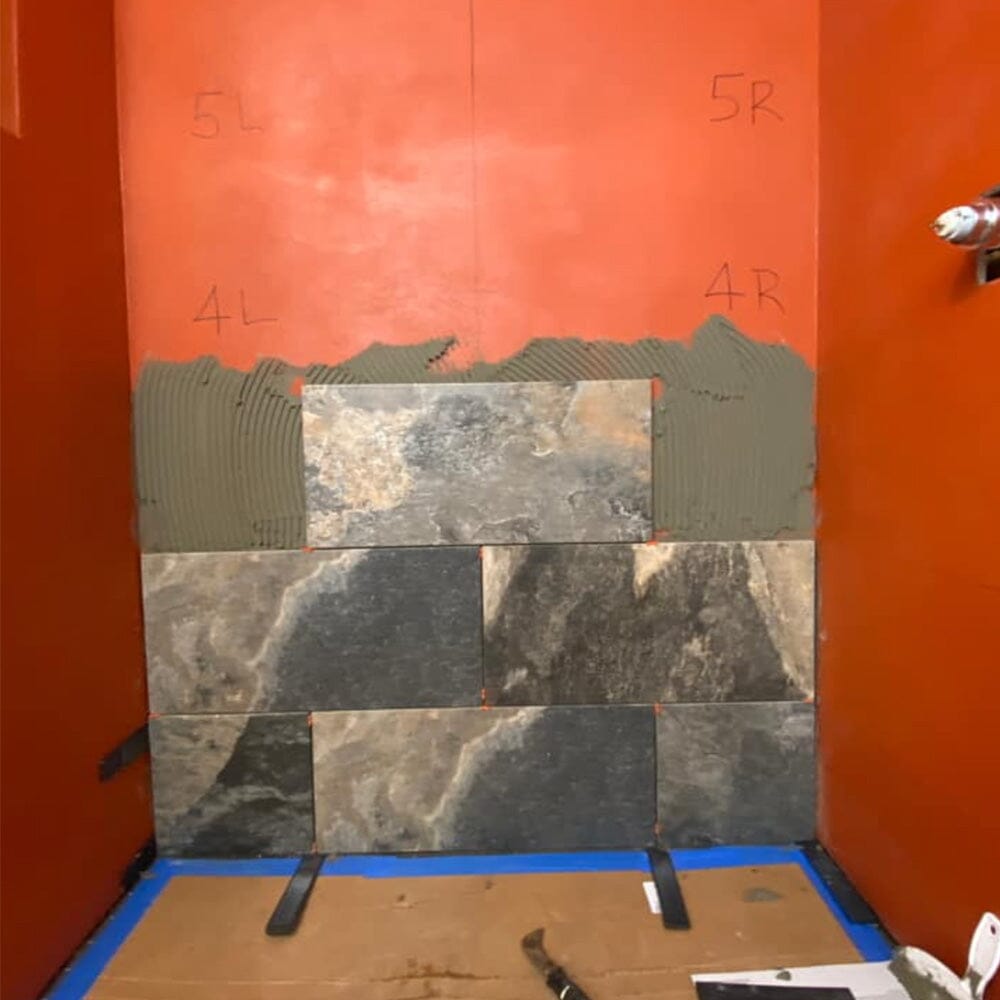
- Tiled shower subfloors: coat the plywood before any fabric reinforcement or tile goes down, and pay extra attention to the panel seams.
- Planters and window boxes: these hold wet soil against the wood constantly, so three coats and full cure before planting matters more here than almost anywhere else.
- Deck framing and sheathing: coat before the finish decking goes on top, since framing lumber that never dries out is one of the more common causes of a deck failing from the inside out. If you're waterproofing the whole deck, not just the plywood underneath it, see our complete wood deck waterproofing guide.
Frequently Asked Questions
Is marine plywood waterproof without a coating?
No. Marine-grade plywood uses a higher grade of wood veneer and a fully waterproof glue line between plies, so it resists delamination better than standard exterior plywood. The exposed wood surface is still porous and will absorb water and eventually weather or rot without a surface coating.
Can I waterproof plywood that's already installed outside?
Yes, as long as it hasn't already delaminated or gone soft. Sand the surface, clean off any mildew or dirt, let it dry fully, and apply the coating in the same thin, even coats you'd use on new material.
Does paint waterproof plywood?
Ordinary paint is a vapor barrier at best and isn't designed to bridge the movement of wood as it expands and contracts with temperature and moisture, so painted plywood commonly cracks at the seams and lets water in behind the paint film. A flexible waterproofing membrane is built to move with the substrate instead of cracking over it.
How long does a plywood waterproofing coating last outdoors?
With correct prep and a full cure before exposure, a quality elastomeric membrane is designed to hold up for years of weather exposure, though exact lifespan depends on UV exposure, foot traffic, and whether a protective topcoat is added over high-wear areas.
Do I need to waterproof both sides of the plywood?
If both sides will ever see moisture (a shed floor with ground moisture below and rain above, for example) coat both. If one side is permanently protected and dry (framing covered by finished decking, for instance) that side still benefits from a coat as insurance, but the exposed face is the priority.
Stop Guessing and Start Sealing
SEMCO Liquid Membrane bonds directly to bare plywood, OSB, and cut edges with no primer required.
Shop SEMCO Liquid Membrane →Free shipping on orders over $99. 5-year limited warranty.
Related reading:
- What Is a Liquid Waterproofing Membrane? The Complete Guide
- SEMCO LIQUID MEMBRANE - The Ultimate Guide and Solution to your Waterproofing Needs
- Ultimate Guide to Waterproofing CMU Walls with SEMCO Liquid Membrane
- Why Surface Prep Makes or Breaks Your Waterproofing Job (And How to Do It Right)
- Liquid Rubber Alternatives: A Longer-Lasting Way to Waterproof