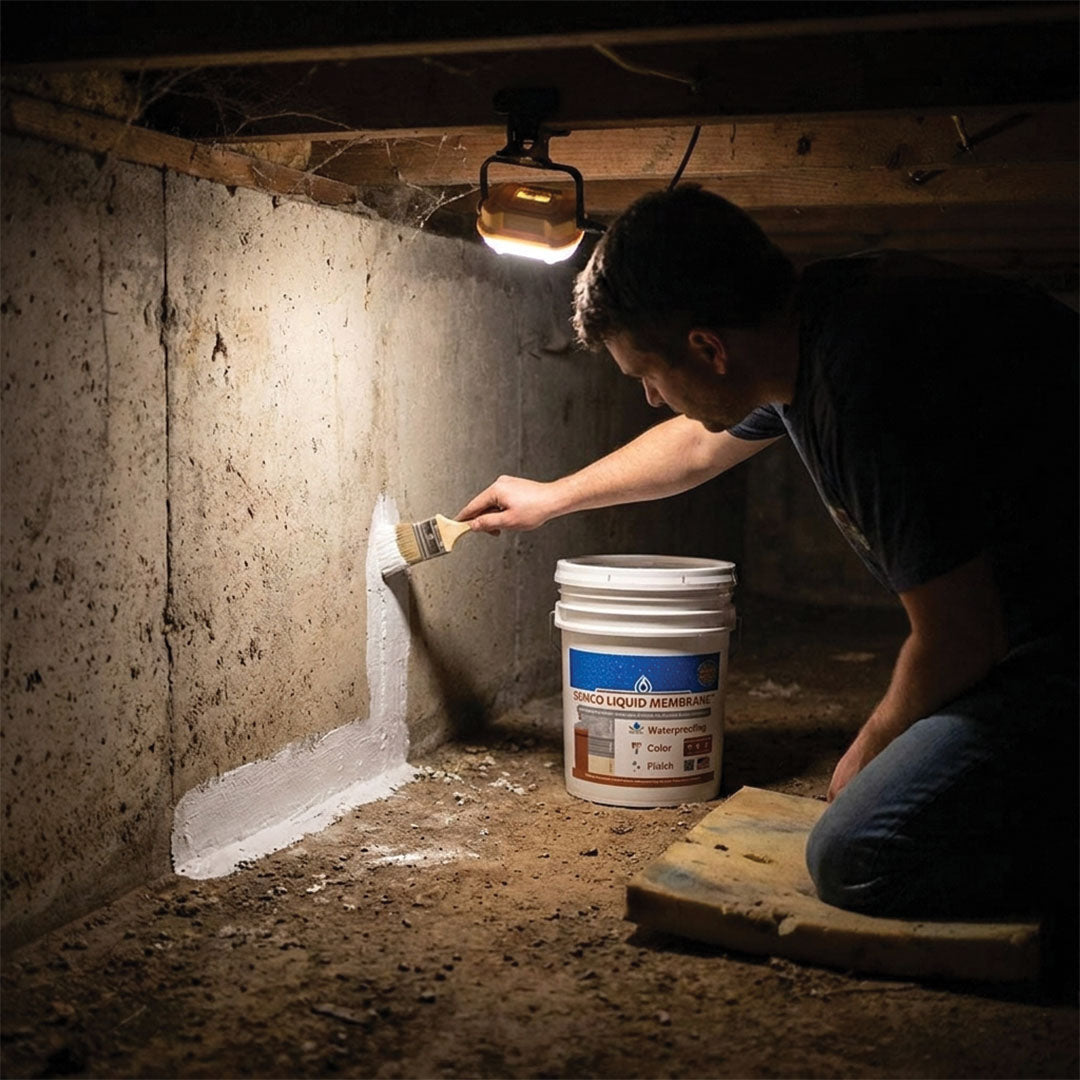

A concrete, built-up, or torch-down flat roof stays watertight through ponding and freeze-thaw cycles the same way a basement wall does: with a flexible, fully bonded membrane, not a rigid patch over the worst-looking spot. The fix that actually holds through winter is to clean and prep the whole roof surface, reinforce every seam, drain, and penetration with embedded fabric, and apply a water-based elastomeric coating in two full coats of 15 to 20 mil each before the first hard freeze.
In this article
- Why flat and concrete roofs leak differently than pitched roofs
- How to prep a concrete or flat roof before coating
- How to apply the membrane
- The seams and penetrations that fail first
- Why this needs to happen before winter, not after
- FAQ
Why Flat and Concrete Roofs Leak Differently Than Pitched Roofs
This guide covers concrete, built-up, torch-down, and bitumen flat roofs. If your roof is metal instead, the leak sources and prep are different, so start with our metal roof leak guide instead.
A pitched roof sheds water quickly, so a small gap in the surface often dries out before it causes real damage. A flat or low-slope concrete, built-up, or torch-down roof does the opposite: water ponds on it, sits there for hours or days after a storm, and finds every low spot, hairline crack, and seam while it's sitting still. Add a freeze-thaw cycle on top of that standing water and small cracks in old concrete or aging bitumen widen every winter until they're an active leak. That's why flat roof waterproofing has to be a continuous membrane across the whole field, not a caulk gun aimed at the spot where the ceiling stain showed up.
How to Prep a Concrete or Flat Roof Before Coating
Prep decides whether the coating bonds for years or peels within a season, and the right prep depends on what's already on the roof:
- Bare or weathered concrete: clean with a mineral-acid cleaner to lift efflorescence and mineral deposits, then finish with a neutral-pH cleaner before the roof dries.
- Existing torch-down, built-up, or bitumen roofing: clean with a degreaser-style cleaner to strip weathering and residue, since these substrates typically don't need the mineral-acid step. For an older, weathered bitumen roof specifically, see our guide to waterproofing old bitumen substrates.
- A roof with an unknown prior coating: treat it like the bitumen prep, then add a light sand if the old coating is glossy, since an unknown chemistry is the single most common cause of a new coating failing to bond.
Rinse cleaners fully, and don't coat until the surface is dry and below about 3% moisture. No primer step is needed once the surface is properly cleaned, which is one less product and one less thing to get wrong compared to systems built around a separate primer coat.
How to Apply the Membrane
- Fix any active structural cracks first. The membrane bridges hairline cracking and bonds tightly to the surface, but it isn't a structural repair for a roof deck that's actively moving.
- Embed fabric reinforcement into the first wet coat over every seam, drain, penetration, and any crack wider than about a quarter inch.
- Roll or spray two even coats, each at 15 to 20 mil, over the entire field, not just the problem areas. Thin coats avoid trapping moisture underneath, which is what causes a coating to stay tacky.
- Recoat the same day once the first coat takes no fingerprint, typically 25 to 45 minutes at 72°F. If the first coat has already fully cured by the time you get back to it, re-clean that area before the second coat goes on, or the two coats won't bond to each other properly.
- Cure a full seven days before the roof sees standing water, heavy rain, or foot traffic, longer in cold or humid weather.

A water-based elastomeric membrane that bonds to concrete, built-up roofing, torch-down, and bitumen with no separate primer coat.
The Seams and Penetrations That Fail First
Most flat roof leaks don't start in the open field, they start at a joint: a drain collar, a vent pipe boot, an HVAC curb, a parapet wall junction, or a seam between roofing sections. Those are the spots that move the most with temperature change and get the least UV protection, so they're also where a rigid or thin coating cracks first. Embedding fabric reinforcement into the wet membrane at every one of these points, then coating over it, is what turns a flat coat into a system that can actually flex with the roof instead of fighting it.

Polyester fabric embedded in the wet membrane at seams, drains, vents, and any crack wider than a quarter inch.
Why This Needs to Happen Before Winter, Not After
Application matters as much as the product: SEMCO Liquid Membrane needs to go on between 50°F and 85°F, out of direct sun, with no rain or dew expected before it skins over, and it needs a full week to cure before it's exposed to standing water. Wait until the first cold snap or the first winter storm has already found the leak, and you're stuck patching in marginal weather instead of coating the whole roof properly. The window to do this right closes earlier than most people plan for, so treat the stretch between the end of fall cleanup and the first hard freeze as the deadline, not a suggestion.
Frequently Asked Questions
Can you waterproof a concrete roof yourself, or does it need a roofer?
A DIY-applied liquid membrane system is designed for roll, brush, or spray application without specialty equipment, so a careful homeowner can do it. Extensive structural cracking, standing water that never drains, or a roof deck that flexes underfoot is a sign the underlying structure needs a professional look before any coating goes on.
How long does a flat roof coating last?
A properly prepped and applied water-based elastomeric membrane is built for multi-year UV and weather exposure; SEMCO backs Liquid Membrane with a 5-year limited warranty (10 years on non-traffic surfaces). Actual lifespan depends on UV exposure, ponding, and foot traffic.
Do I need a primer before coating a flat roof?
No, as long as the surface is correctly cleaned and prepped for its substrate type. The membrane is formulated to bond directly to clean concrete, built-up roofing, torch-down, and bitumen.
What temperature is too cold to coat a roof?
Stay above 50°F and below 85°F, and avoid applying in direct sun. Below that range the coating won't skin over and cure correctly, which is exactly why this job needs to happen before the weather turns, not during the first cold spell.
Does this work over an old torch-down or built-up roof?
Yes. Clean and degrease the surface first, and if you're not sure what the existing coating is made of, treat it as an unknown coating and do a light sand plus the same cleaning step before applying the membrane.
Get the Roof Sealed Before the First Freeze
SEMCO Liquid Membrane and Fabric Reinforcement bond directly to concrete, built-up, and torch-down roofing with no primer required.
Shop Liquid Membrane →Free shipping on orders over $99. 5-year limited warranty.
Related reading: