



Fabric Reinforcement
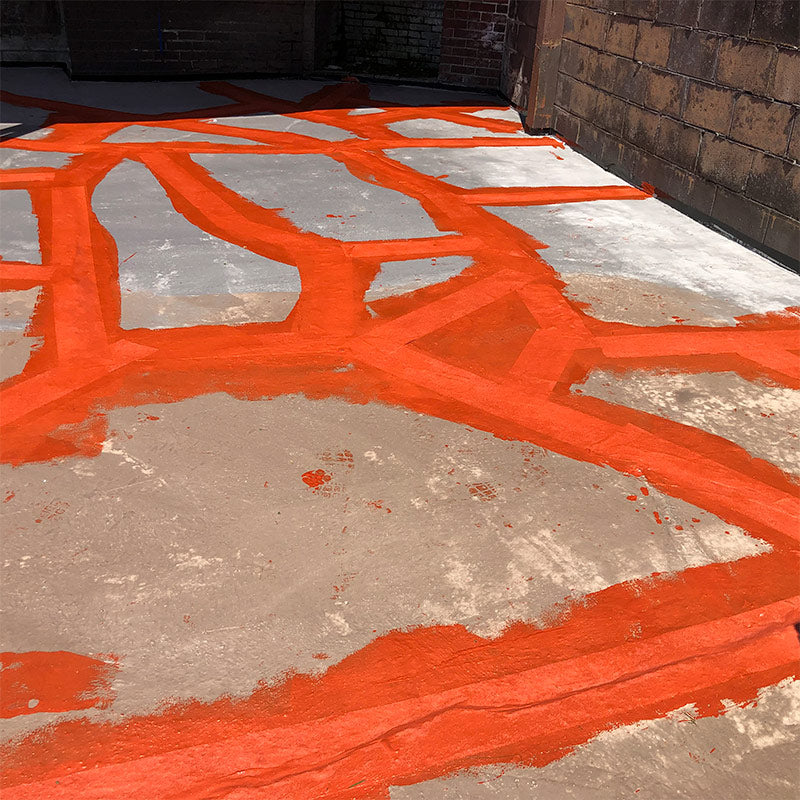
- What it is: A soft, nonwoven, cloth-type reinforcing fabric (not an open-weave mesh) applied wet-in-wet with SEMCO Liquid Membrane to add strength and crack-bridging capability at corners, coves, joints, plane changes, and cracks wider than 1/4".
- Best for: Any waterproofing installation with structural transition points — inside/outside corners, cove bases, control joints, driveway/walkway joints — or existing cracks too wide for the membrane to bridge on its own.
- Stands out because: It's a soft, cloth-type reinforcement layer purpose-matched to SEMCO Liquid Membrane's own 1300% elongation chemistry, rather than a generic open-weave mesh tape borrowed from drywall or stucco work.
- Keep in mind: It's used in conjunction with SEMCO Liquid Membrane, not on its own — and it stays visible if Liquid Membrane is used as a finish coat rather than fully encapsulated.
 Shipped From USA
 100% Biodegradable
 Low Odor & Low VOC
 Made in USA
Structural Performance
- Reinforces load-bearing waterproofing membranes at ceramic tile, stone, and brick installations.
- Increases durability significantly at joints and corners.
- Improves crack resistance and actively bridges existing cracks wider than 1/4".
Application Flexibility
- Interior and exterior use.
- Vertical and horizontal surfaces, including ceilings.
- Available in a narrow 6" roll for spot/joint work and a wide 29.5" roll for broad-area reinforcement.
System Compatibility
- Engineered to be used in conjunction with SEMCO Liquid Membrane specifically — a soft, cloth-type nonwoven fabric, not a generic open-weave mesh tape.
- Fully encapsulates within two coats of Liquid Membrane for a seamless, continuous finish (or can remain visible if Liquid Membrane is used as the finish coat).
- Purpose-built for SEMCO Liquid Membrane. Designed to be pressed into a wet coat of Liquid Membrane and encapsulated with a second coat, forming one continuous, flexible waterproofing system rather than two separately-performing layers.
- Required at high-stress transition points. SEMCO's own installation guidance calls for it at coves, corners, and changes of plane — the places a membrane alone is most likely to fail under movement.
- Bridges cracks a membrane can't handle solo. For cracks and control joints wider than 1/4", Fabric Reinforcement is the recommended step before recoating; narrower cracks (under 1/4") can typically be bridged by Liquid Membrane alone.
- Works on vertical, horizontal, and overhead surfaces. Interior and exterior use, including ceilings — not limited to floors.
- Two roll sizes for any job scale. A 6" x 75 ft roll for spot reinforcement (corners, joints, cracks) and a 29.5" x 100 ft roll for large-area reinforcement.
- Simple wet-lay installation. No special tools or curing chemistry beyond what's already needed for a standard Liquid Membrane application.
- Coves, inside/outside corners, and changes of plane — required by SEMCO's installation guidance wherever a waterproofing membrane changes direction or transitions between surfaces.
- Control joints and cracks wider than 1/4" — bridges movement that Liquid Membrane alone isn't rated to absorb.
- Driveway and walkway joints — recommended on all joints, applied 4" on each side of the joint line.
- Basements, showers, pool decks, roofs (including RV roofs), garage floors, and concrete surfaces — referenced as a reinforcement step across SEMCO's substrate-specific installation guides.
- Wood, cement board/Hardiebacker, metal, and brick surfaces without an existing coating — anywhere Liquid Membrane is applied and extra joint/seam/crack strength is needed.
Standard installation (corners, coves, plane changes, general reinforcement):
- Apply a generous, even coat of SEMCO Liquid Membrane to the area where the Fabric Reinforcement will be installed, ensuring full coverage for optimal bonding.
- While the Liquid Membrane is still wet, press the Fabric Reinforcement firmly onto the surface and smooth it flat, working out any air bubbles or wrinkles.
- Let the first coat set — SEMCO's guidance ranges from 10–15 minutes to 5–10 minutes depending on the source (see Notes below) — before applying a second coat of Liquid Membrane over the fabric to fully encapsulate it.
- Once that coat has dried to the touch, apply Liquid Membrane evenly over the entire surface for complete, continuous waterproofing coverage.
For cracks and control joints wider than 1/4":
- Apply a generous coat of SEMCO Liquid Membrane directly over the crack or joint.
- While still wet, press the Fabric Reinforcement over the area and smooth it flat.
- After the recommended set time, roll another coat of Liquid Membrane over the fabric to encapsulate it, then let it dry to the touch.
- Apply Liquid Membrane over the entire surrounding surface to complete the waterproofing system.
For driveway and walkway joints: Apply Liquid Membrane 4" on each side of the joint line, press the Fabric Reinforcement over the joint while wet, encapsulate with a second coat, and let it dry completely before continuing to the next step.
Note: Cracks narrower than 1/4" generally don't require Fabric Reinforcement — SEMCO Liquid Membrane can typically be applied directly over them.
PRODUCT INFO
SEMCO Fabric Reinforcement is a purpose-built reinforcing fabric designed to work wet-in-wet with SEMCO Liquid Membrane, adding load-bearing strength exactly where a waterproofing membrane needs it most: coves, corners, changes of plane, control joints, and any crack wider than 1/4". Pressed into a fresh coat of Liquid Membrane and then encapsulated with a second coat, it forms a continuous, flexible, seamless reinforcement layer that bonds to a wide variety of substrates and helps stop cracks from transferring up into the finished surface.
It's not a standalone product — it's the companion reinforcement system engineered specifically for SEMCO Liquid Membrane's crack-bridging waterproofing process, required at high-stress transition points (corners, coves, plane changes) and strongly recommended on joints, cracks, basements, driveways, walkways, pool decks, roofs, and other project types across SEMCO's installation guides.
- Type – Reinforcing fabric — a soft, woven, cloth-type material, not an open-weave mesh (used wet-in-wet with SEMCO Liquid Membrane)
- Size — Roll 1 – 6" x 75 ft (approx. 37.5 sq ft per roll)
- Size — Roll 2 - 129.5" x 100 ft (approx. 245.8 sq ft per roll)
- Used with - SEMCO Liquid Membrane (required companion product)
How Fabric Reinforcement Compares to Other Reinforcement Approaches
Fabric Reinforcement is positioned by SEMCO as the required companion to Liquid Membrane at structural transition points. Here's how that wet-lay fabric-and-membrane approach compares to skipping reinforcement altogether, or to reaching for a generic fiberglass mesh tape, based on SEMCO's own guidance and general, sourced information on crack-isolation membranes as a category (not a specific named competing product).
| SEMCO Fabric Reinforcement (with Liquid Membrane) |
No Reinforcement Fabric (Membrane Alone) |
Generic Fiberglass Mesh Tape | |
|---|---|---|---|
| Designed to work with the membrane's elongation | ✓ Matched to Liquid Membrane's up to 1300% stretch system |
N/A — relies entirely on membrane's own crack-bridging limit | ✗ Not engineered for this specific membrane chemistry |
| Recommended for corners, coves, and plane changes | ✓ Required per SEMCO's installation guidance |
Real risk Highest-movement points in an installation |
Sometimes used generically, but not validated for this system |
| Crack-bridging capability | Bridges cracks and joints wider than 1/4″ | Limited to what Liquid Membrane alone can bridge (best under 1/4″) | Varies widely by product; not tested against SEMCO's system |
| Risk of adhesion or system failure | Low When installed per instructions |
Higher At high-stress transition points without reinforcement |
Uncertain — mismatched fabric/membrane bonding can affect long-term performance |
| Installation method | Simple wet-lay: press into wet membrane, encapsulate with a second coat | N/A | Varies by product; may require different embedding compounds |
This comparison reflects SEMCO's own installation guidance plus general, publicly available information about crack-isolation and reinforcement fabrics as a category — not a specific named competing product.
SEMCO Liquid Membrane™ is trusted by professional waterproofing contractors, builders, pool service companies, property managers, and facilities teams across the country. We offer dedicated support and volume pricing for businesses.
Benefits List
- Volume discount pricing on 5-gallon pails and case ordersPriority technical support from application experts
- Fast reorder history and account management
- Co-branded project documentation and spec sheets available
- Suitable for: waterproofing contractors, pool builders, property maintenance, HOAs, facility managers
CTAs
- Enquire About Pro Pricing → CONTACT US
- Call Us: 1-833-211-2297
The full version
Detailed application instructions.
Pick your project. Every step, with the detail you’ll want while you’re actually doing it.
01 Clean the surface — Prep D
You’ll need: Nu-Lift Cleaner · Stone Soap
Basement walls and floors carry mineral deposits, efflorescence — that white chalky bloom — and old residue. None of it lets a coating bond.
- Remove loose paint, dust and debris. Scrape anything flaking.
- Wet the surface, then apply Nu-Lift Cleaner and work it in with a stiff bristle brush to lift mineral deposits and efflorescence.
- Rinse with fresh water.
- Follow with Stone Soap to remove the residue Nu-Lift released and rebalance the surface pH, then rinse again.
- Let it dry completely — hours, not minutes. This is the step people rush.
02 Bridge cracks wider than ¼"
You’ll need: Fabric Reinforcement · Liquid Membrane
Hairline cracks need nothing — the membrane spans those on its own. Anything wider will reopen and telegraph through unless it’s reinforced.
- Fill large cracks first with foam or hydraulic filler.
- Apply a generous coat of Liquid Membrane over the crack.
- Lay Fabric Reinforcement into the wet coating and press it flat.
- Wait 10–15 minutes.
- Coat over the fabric again to fully encapsulate it.
- Let it dry to the touch before moving on.
03 Mask off
Tape anything not being coated — frames, fixtures, pipe collars, the edge of a floor you’re stopping at.
04 Roll two coats
Each coat: 15–20 mil. Keep every coat in that range — thicker traps moisture and stays tacky, thinner leaves the membrane short of waterproof.
You’ll need: Liquid Membrane · ½" nap roller
- Check any pre-treated areas from step 2 are fully dry.
- Stir the product well. Pigments settle, and unstirred product gives uneven color.
- Apply a thin, even coat over the whole surface including the pre-treated areas.
- Wait for the recoat window: it’s ready when you can walk on it without leaving residue, and can’t leave a fingerprint. Roughly 25–45 minutes at 72°F.
- Apply the second coat perpendicular to the first. Both coats go on the same day.
- Let it dry to touch — roughly 1–2 hours at 70°F and 50% humidity.
- Inspect for pinholes, voids and thin spots. It dries lighter, which makes them easier to see. Touch up with more membrane.
05 Let it cure
Initial cure is at least 7 days, and longer if the coats went on thick or the air is humid. Keep water off it for the whole window — the surface needs to be fully cured and hard before it sees any.
06 Seal the floor — if it takes traffic
Floors only · walls need nothing
The membrane is rated for light foot traffic. If your floor will carry regular walking, furniture, shelving, appliances or storage, add a topcoat about 2 days after the last coat of membrane — not as soon as it’s dry to touch.
- Titan Shield Gloss — a water-based polyurethane hybrid and the tougher of the two. Three coats, roughly 150 sq ft per gallon. Choose it for heavy traffic or heavy objects standing on the floor.
- SEMCO Sealer MATTE — the same protection without the shine. Two coats, roughly 120 sq ft per gallon. Choose it for a finished basement where gloss would look wrong.
| Each coat | 15–20 mil · thin and even |
| Membrane coverage | ~200 sq ft per gallon at 2 coats |
| Recoat window | When it holds no fingerprint — same day |
| Dry to touch | 1–2 hours at 70°F |
| Initial cure | 7 days minimum · longer if thick or humid |
| Temperature | 50–85°F · out of direct sun |
| Max substrate moisture | 3% |
| Cleanup | Warm water, straight after use |
01 Expose, clean and dry
You’ll need: Nu-Lift Cleaner · Stone Soap
- Excavate to the footing where you can, or as deep as the problem goes.
- Remove soil, roots, loose mortar and anything flaking. Old tar can stay if it’s sound.
- Apply Nu-Lift Cleaner, work it in with a stiff brush, rinse.
- Follow with Stone Soap to clear the residue and rebalance the surface pH, then rinse again.
- Let it dry completely. A wall that has been underground holds moisture — give it more time than you think.
02 Fill and reinforce
You’ll need: filler · Fabric Reinforcement · Liquid Membrane
- Fill large voids with foam or hydraulic filler and let it cure.
- Cracks up to ¼" the membrane bridges on its own — a customer about to buy cement for a hairline crack found he didn’t need it.
- Anything wider, or any joint that moves: coat, lay in Fabric Reinforcement, wait 10–15 minutes, coat over it.
- Do the same at the footing junction, around bulkheads and along the sill plate line.
03 Coat the wall
Each coat: 15–20 mil. Keep every coat in that range — thicker traps moisture and stays tacky, thinner leaves the membrane short of waterproof.
- Stir well — pigments settle and unstirred product gives uneven color.
- ½" nap roller on flat concrete; a masonry brush for block, stone and stucco.
- Two coats on smooth poured concrete, three on block or stone, four to five on ICF foam.
- Recoat when it holds no fingerprint — a day apart is common in cool weather.
04 Cure, drain, backfill
Initial cure is at least 7 days, and longer if the coats went on thick or the air is humid.
| Each coat | 15–20 mil · thin and even |
| Poured concrete | ~200 sq ft per gallon at 2 coats |
| Block | ~150 sq ft per gallon at 3 coats |
| Stone or rubble | ~120 sq ft per gallon at 3 coats |
| ICF foam forms | ~100 sq ft per gallon at 4 coats |
| Bridges cracks up to | ¼" without fabric |
| Cure before backfill | 7 days minimum · longer if humid |
01 Clean the surface
Every surface needs the right cleaner pair. Here is the rule.
- EPDM, rubber, shingle, torch-down — Prep B: Power Cleaner then Stone Soap. Power Cleaner cuts through grease, weathering and chalk; Stone Soap clears the residue and rebalances the surface pH.
- Metal, concrete decks, gutters — Prep D: Nu-Lift then Stone Soap. Nu-Lift chemically etches the surface and lifts oxidation; Stone Soap clears the residue and rebalances the surface pH.
- Plywood or timber — Prep E: sand with 60-grit. No cleaner; wood absorbs water.
- Unknown coating — Prep C: Power Cleaner then Nu-Lift.
- Clear debris, moss and loose granules first.
- Apply the cleaner, work it in with a stiff brush, rinse thoroughly.
- Follow with Stone Soap — it clears the residue and rebalances the surface pH — then rinse again.
- Let it dry completely before you coat.
02 Reinforce every seam and penetration
You’ll need: Fabric Reinforcement · Liquid Membrane
Roofs leak at joins, not in the field. Treat every one of them before you coat the surface.
- Apply a generous coat of membrane along the seam, lap, edge or around the penetration.
- Lay Fabric Reinforcement into the wet coating and press it flat.
- Wait 10–15 minutes.
- Coat over the fabric to fully encapsulate it, and let it dry to touch.
03 Roll two coats over everything
Each coat: 15–20 mil. Keep every coat in that range — thicker traps moisture and stays tacky, thinner leaves the membrane short of waterproof.
You’ll need: Liquid Membrane · ½" nap roller · extension pole
- Check the reinforced areas from step 2 are fully dry.
- Stir the product well — pigments settle, and unstirred product gives uneven color.
- Apply a thin, even coat across the entire surface.
- Recoat when it holds no fingerprint — roughly 25–45 minutes at 72°F.
- Second coat perpendicular to the first. Both coats the same day.
- Inspect for pinholes and thin spots; it dries lighter, which makes them easier to see.
04 Cure — and watch the forecast
Dry to touch in about an hour. Initial cure is at least 7 days — longer with thick coats or high humidity. Apply between 50–85°F, out of direct sun.
| Each coat | 15–20 mil · thin and even |
| Coverage | ~200 sq ft per gallon at 2 coats |
| Recoat window | When it holds no fingerprint — same day |
| Initial cure | 7 days minimum · longer if thick or humid |
| Temperature | 50–85°F · out of direct sun |
| Corrugated metal | Add ~25% for profile |
| Cleanup | Warm water, straight after use |
01 Clean the roof
- EPDM, TPO, fiberglass — Prep B: Power Cleaner then Stone Soap.
- Aluminum or metal — Prep D: Nu-Lift then Stone Soap. Nu-Lift chemically etches the surface.
- Previously coated or unknown — Prep C: Power Cleaner then Nu-Lift.
- Sweep off debris and wash away road film.
- Apply the first cleaner, work it in with a soft brush, rinse thoroughly.
- Follow with the second, rinse again.
- Let it dry completely before you coat.
02 Reinforce every penetration
You’ll need: Fabric Reinforcement · Liquid Membrane
- Coat around the penetration generously.
- Lay Fabric Reinforcement into the wet coating and press it flat.
- Wait 10–15 minutes, then coat over it to encapsulate.
03 Roll two coats
Each coat: 15–20 mil. Keep every coat in that range — thicker traps moisture and stays tacky, thinner leaves the membrane short of waterproof.
- Check the reinforced areas are fully dry.
- Stir the product well — pigments settle and unstirred product gives uneven color.
- ½" nap roller, thin and even. Second coat perpendicular to the first, same day.
- Inspect for pinholes and thin spots — it dries lighter, which makes them easy to see.
04 Cure — and watch the forecast
Dry to touch in about an hour. Initial cure is at least 7 days — longer with thick coats or high humidity. Apply between 50–85°F, out of direct sun.
| Each coat | 15–20 mil · thin and even |
| Coverage | ~200 sq ft per gallon at 2 coats |
| Roof area | Length × 8 ft (typical RV width) |
| Initial cure | 7 days minimum · longer if thick or humid |
| Temperature | 50–85°F · out of direct sun |
| Warranty | 5 years, covers mobile applications |
| Primer | None — prep only |
01 Strip, sand and dry
Prep E · 60-grit · no cleaner
- Pressure wash to remove dirt, algae and loose fibres.
- Sand off every trace of old stain, sealer or paint with 60-grit. The coating bonds to bare timber, not to what was on it.
- Vacuum or blow off all dust.
- Let the wood dry fully — days, not hours, after washing. Wood holds water long after the surface looks dry.
02 Reinforce joints and end grain
You’ll need: Fabric Reinforcement · Liquid Membrane
End grain is the thirstiest part of any board and the first place rot starts. Treat it before you coat the field.
- Coat the joint, board end or transition generously.
- Lay Fabric Reinforcement into the wet coating and press it flat.
- Wait 10–15 minutes, then coat over it to encapsulate.
03 Three coats of membrane
Each coat: 15–20 mil. Keep every coat in that range — thicker traps moisture and stays tacky, thinner leaves the membrane short of waterproof.
- Stir the product well — pigments settle and unstirred product gives uneven color.
- First coat goes into the timber and will look thin. That’s the wood drinking it, and it’s normal.
- Recoat when it holds no fingerprint. Run each coat perpendicular to the last.
- Three coats on bare wood. Inspect for thin spots — it dries lighter, which makes them easy to see.
04 Cure, then seal
Wait about 2 days after the last coat of membrane, then seal: three coats of Titan Shield Gloss or two of Sealer MATTE, about 6–8 mil per coat, with Non-Skid Additive mixed in. The membrane still needs its full 7-day cure before heavy use.
| Each coat | 15–20 mil · thin and even |
| Bare wood coverage | ~100 sq ft per gallon at 3 coats |
| Previously coated | ~150 sq ft per gallon at 3 coats |
| Sealer coverage | Titan ~150 · Matte ~120 sq ft/gal |
| Sealer over membrane | ~2 days after the last membrane coat |
| Sealer thickness | ~6–8 mil per coat |
| Initial cure | 7 days minimum · longer if humid |
| Temperature | 50–85°F · out of direct sun |
| Prep | Prep E — sand with 60-grit, no cleaner |
01 Drain, strip and dry
- Drain fully. Check with a pool professional first if your water table is high — an empty shell can float.
- Remove failed plaster, chalking gelcoat or any coating that is letting go.
- Let the shell dry out properly. Days, not hours.
02 Clean and reinforce
You’ll need: Nu-Lift Cleaner · Stone Soap · Fabric Reinforcement
- Apply Nu-Lift Cleaner to lift scale, waterline deposits and calcium. Rinse.
- Follow with Stone Soap to clear the residue and rebalance the surface pH. Rinse again.
- Coat cracks over ¼" and the floor-to-wall cove, lay in Fabric Reinforcement, wait 10–15 minutes, coat over it.
- Let everything dry before the field coats.
03 Three coats with Color Activator
Each coat: 15–20 mil. Keep every coat in that range — thicker traps moisture and stays tacky, thinner leaves the membrane short of waterproof.
- Stir the membrane well, then mix in one Color Activator per container — matched to the same size and color.
- Roller on the flat, brush into the cove, corners and around fittings.
- Recoat when it holds no fingerprint. Three thin coats, not thick ones.
- Inspect for pinholes and thin spots before you stop — on a shell this size one missed patch is the leak.
04 Cure, fill, then balance
Initial cure is at least 7 days, and longer if the coats went on thick or the air is humid. Fill only after that.
| Each coat | 15–20 mil · thin and even |
| Coverage, submerged | ~100 sq ft per gallon at 3 coats |
| Color Activator | One per membrane container, same size and color |
| Cure before filling | 7 days minimum · longer if thick or humid |
| Chlorine | Normal levels — high concentrations can discolor |
| Temperature | 50–85°F · out of direct sun |
01 Drain, strip and dry
- Drain it fully. If there are fish, move them before you start.
- Remove any failed coating — the membrane bonds to sound substrate, not to something already letting go.
- Let it dry out properly. Concrete that has held water for years holds it in the pores too. Days, not hours.
02 Clean the surface
You’ll need: Nu-Lift Cleaner · Stone Soap
- Pressure wash if the surface takes it.
- Apply Nu-Lift Cleaner and work it in to lift mineral deposits and old waterline staining. Rinse.
- Follow with Stone Soap to clear the residue and rebalance the surface pH. Rinse again.
- Let it dry completely before coating.
03 Three thin coats
Each coat: 15–20 mil. Keep every coat in that range — thicker traps moisture and stays tacky, thinner leaves the membrane short of waterproof.
- Stir well — pigments settle and unstirred product gives uneven color.
- Roller on the flat, brush into corners, cracks and around any fittings.
- Recoat when it holds no fingerprint. Three coats for submerged work.
- Check the waterline and the base especially — those are where leaks reappear.
04 Cure — then fill
Initial cure is at least 7 days, and longer if the coats went on thick or the air is humid. Owners who waited report no leaks; the ones who rushed are the ones who redid it.
| Each coat | 15–20 mil · thin and even |
| Coverage, submerged | ~100 sq ft per gallon at 3 coats |
| Coats | 3 — thin, not thick |
| Cure before filling | 7 days minimum · longer if thick or humid |
| New concrete | Let it cure ~1 month before coating |
| Temperature | 50–85°F · out of direct sun |
| Prep | D on concrete · sand fiberglass first |
01 Degrease, then Prep D
You’ll need: a degreaser · Nu-Lift Cleaner · Stone Soap
- Degrease oil and transmission stains first. No coating bonds to oil, and Prep D isn’t a degreaser.
- Wet the slab, apply Nu-Lift Cleaner and work it in with a stiff brush to lift efflorescence and mineral deposits.
- Rinse thoroughly.
- Follow with Stone Soap to clear the residue and rebalance the surface pH, then rinse again.
- Let the slab dry completely. Concrete holds water long after the surface looks dry.
02 Reinforce cracks and joints
You’ll need: Fabric Reinforcement · Liquid Membrane
- Fill anything wider than ¼" with a suitable filler first.
- Coat the crack or joint generously, lay Fabric Reinforcement into the wet film, press it flat.
- Wait 10–15 minutes, then coat over it to encapsulate.
03 Two coats of membrane
Each coat: 15–20 mil. Keep every coat in that range — thicker traps moisture and stays tacky, thinner leaves the membrane short of waterproof.
- Stir well — pigments settle and unstirred product gives uneven color.
- ½" nap roller on an extension pole; cut in the edges with a brush.
- Recoat when it holds no fingerprint. Second coat perpendicular to the first, same day.
- Inspect for pinholes and thin spots before you stop.
04 Cure, then seal
Wait about 2 days after the last coat of membrane, then seal: three coats of Titan Shield Gloss or two of Sealer MATTE, about 6–8 mil per coat, with Non-Skid Additive mixed in. The membrane still needs its full 7-day cure before heavy use.
| Each coat | 15–20 mil · thin and even |
| Membrane coverage | ~200 sq ft per gallon at 2 coats |
| Titan Shield Gloss | ~150 sq ft per gallon at 3 coats |
| SEMCO Sealer MATTE | ~120 sq ft per gallon at 2 coats |
| Sealer over membrane | ~2 days after the last membrane coat |
| Sealer thickness | ~6–8 mil per coat |
| Initial cure | 7 days minimum · longer if humid |
| Temperature | 50–85°F · out of direct sun |
| Prep | Prep D — degrease oil stains first |
01 Clean the wall — Prep D
You’ll need: Nu-Lift Cleaner · Stone Soap
- Remove soil, moss, loose mortar and anything flaking.
- Wet the wall, apply Nu-Lift Cleaner and work it in with a stiff bristle brush to lift efflorescence and mineral deposits.
- Rinse with fresh water.
- Follow with Stone Soap to clear the residue and rebalance the surface pH, then rinse again.
- Let it dry completely. A retaining wall holds moisture — give it more drying time than you think.
02 Reinforce joints and the footing line
You’ll need: Fabric Reinforcement · Liquid Membrane
Mortar joints move more than the block does, and the joint where the wall meets its footing moves most of all.
- Repoint anything that has failed before you coat.
- Coat the joint generously, lay Fabric Reinforcement into the wet film, press it flat.
- Wait 10–15 minutes, then coat over it to encapsulate.
03 Coat the face
Each coat: 15–20 mil. Keep every coat in that range — thicker traps moisture and stays tacky, thinner leaves the membrane short of waterproof.
- Stir the product well — pigments settle and unstirred product gives uneven color.
- ½" nap roller on the flat, a masonry brush into the joints and corners.
- Two coats on an exposed face; three on the buried side, on timber, or in a planter.
- Recoat when it holds no fingerprint. One customer applying at 50°F got two to three hours between coats and finished in a day.
04 Cure — and backfill last
Dry to touch in about an hour. Initial cure is at least 7 days — longer with thick coats or high humidity. Apply between 50–85°F, out of direct sun.
| Each coat | 15–20 mil · thin and even |
| CMU / poured concrete | ~200 sq ft per gallon at 2 coats |
| Split-face / rough block | ~150 sq ft per gallon at 2 coats |
| Timber & planters | ~100 sq ft per gallon at 3 coats |
| Initial cure | 7 days minimum before backfill · longer if humid |
| Temperature | 50–85°F · out of direct sun |
| Prep | D on masonry · E on timber |
01 Prepare the substrate
- Cement or backer board — fixed soundly, joints taped, screws flush and dust-free. No cleaner needed.
- Plywood or wood — sand with 60-grit. No cleaner; wood absorbs water and chemistry.
- Existing tile — Nu-Lift then Stone Soap to remove soap residue, water deposits and mold, then rinse and dry.
02 Reinforce every joint and corner
You’ll need: Fabric Reinforcement · Liquid Membrane
- Coat the joint generously, lay Fabric Reinforcement into the wet film, press it flat.
- Wait 10–15 minutes, then coat over it to encapsulate.
- Do this at every board joint, all inside corners, the wall-to-pan junction, the curb, niche corners and around the drain flange.
03 Coat the enclosure
Each coat: 15–20 mil. Keep every coat in that range — thicker traps moisture and stays tacky, thinner leaves the membrane short of waterproof.
- Stir well — pigments settle, and unstirred product gives uneven color.
- Brush into screw heads, seams, corners and niches; roller the flat areas.
- Two coats on board, three on bare wood. Recoat when it holds no fingerprint.
- Inspect under a light. Look for pinholes, voids and thin spots — a customer specifically used a work light to find them, and touch-ups were easy.
04 Tile over it
Once dry, set tile straight onto it with standard thinset. Several customers tiled the next day; one reported mortar bonding to it as if it were concrete.
| Each coat | 15–20 mil · thin and even |
| Cement / backer board | ~200 sq ft per gallon at 2 coats |
| Plywood or bare wood | ~100 sq ft per gallon at 3 coats |
| Standard 3 × 5 ft shower | ~110 sq ft of wall and pan |
| Standard | DIN EN 14891:2017-05 |
| Tile over it | Standard thinset, once dry |
| Temperature | 50–85°F · out of direct sun |
Need a hand? Call 1-833-211-2297 or email info@semcoworks.com — the team will check prep, coverage and cure timing before you start.
Before you buy
The questions worth asking.
What is SEMCO Fabric Reinforcement?
Fabric Reinforcement is a reinforcing fabric embedded between coats of SEMCO Liquid Membrane to add tensile strength at seams, joints, cracks, and high-stress areas.
When should I use Fabric Reinforcement?
Use it at seams, corners, transitions, and cracks, and under ceramic tile or stone, where movement or stress could otherwise cause the membrane to fail.
What sizes does it come in?
It is available in a 6-inch by 75-foot roll for detailing seams and joints, and a 29.5-inch by 100-foot roll for larger field areas.
More questions? Browse every SEMCO FAQ.